What are you looking for?
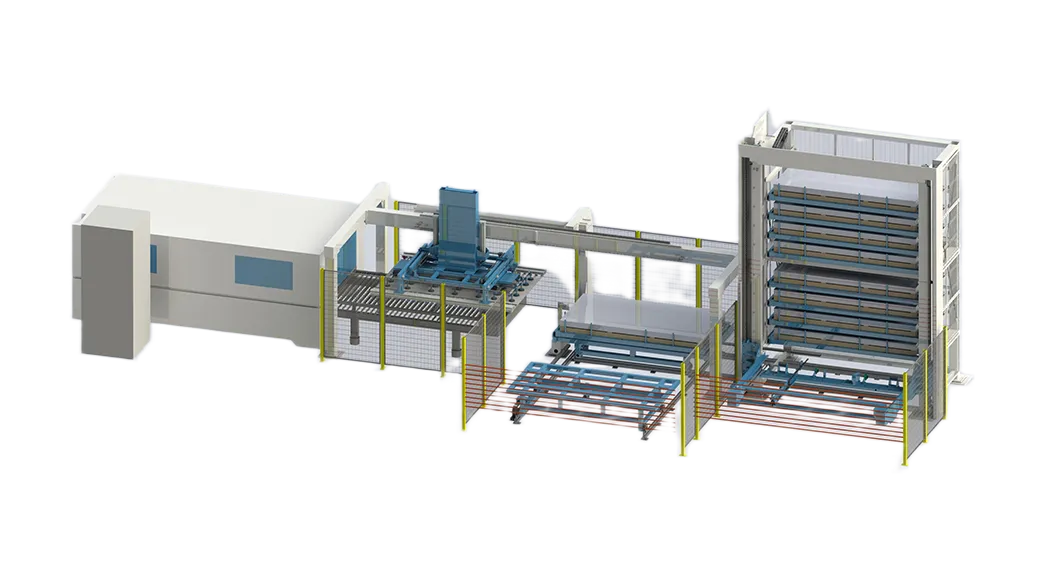
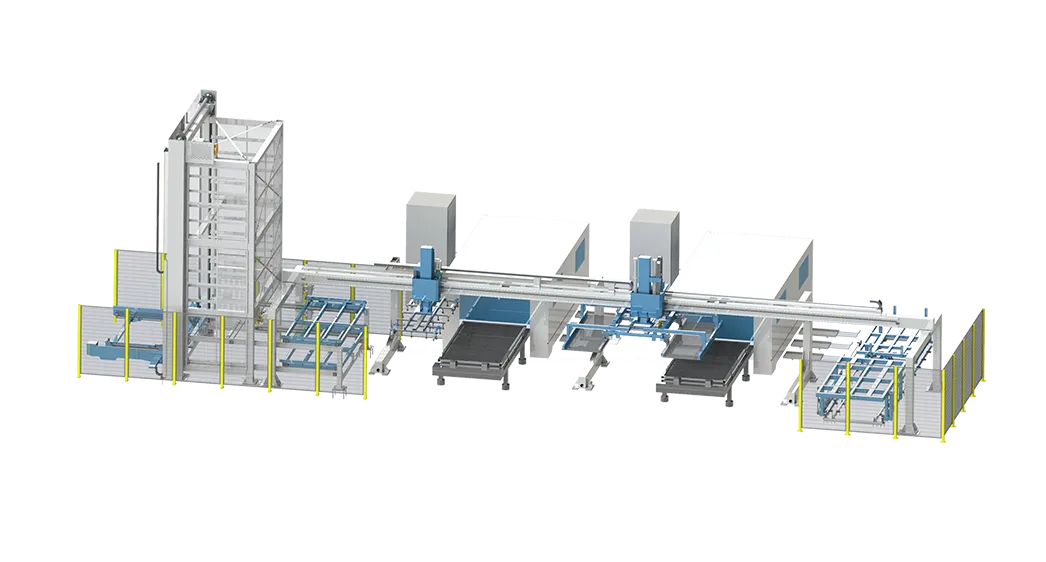
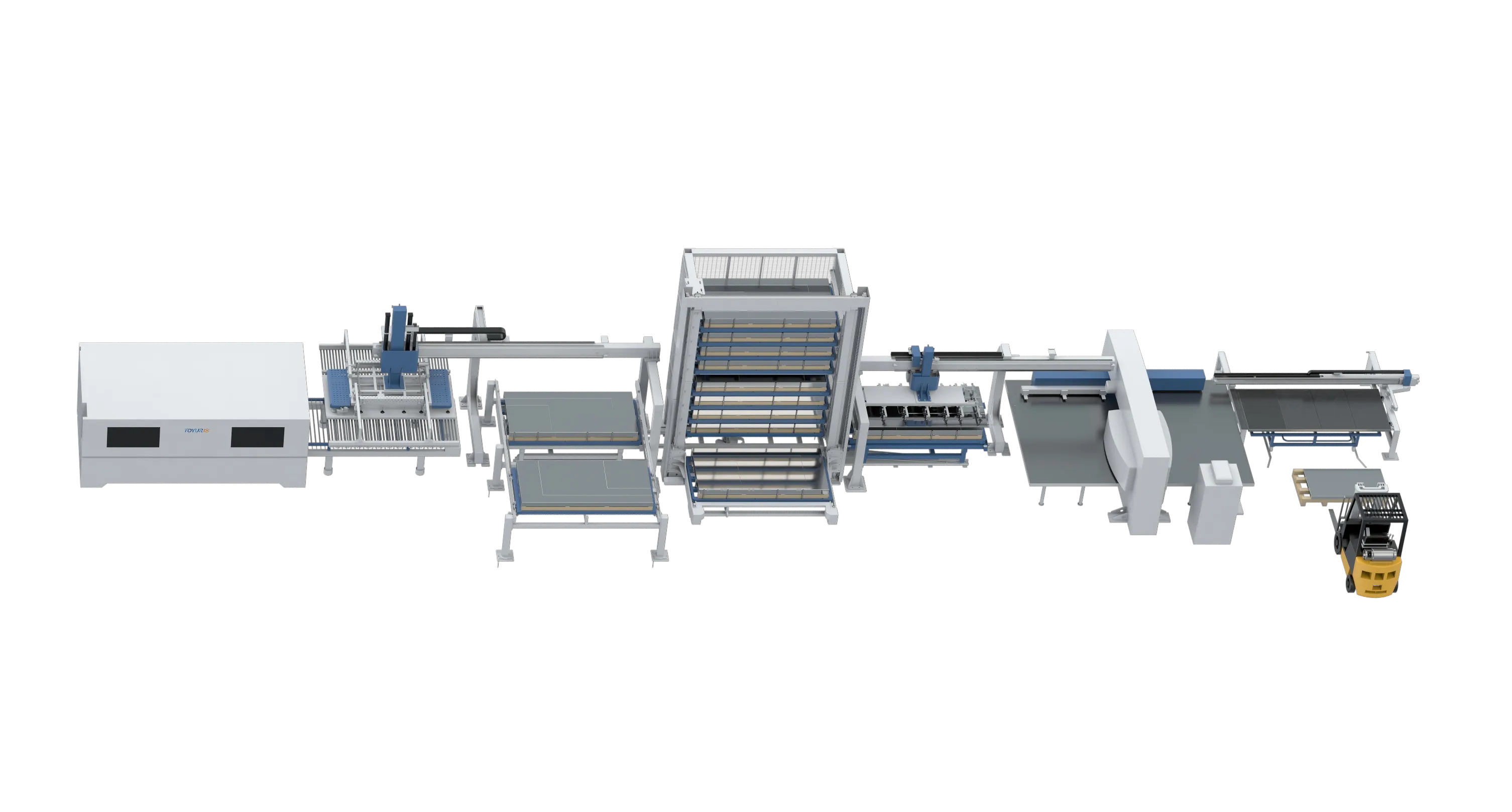
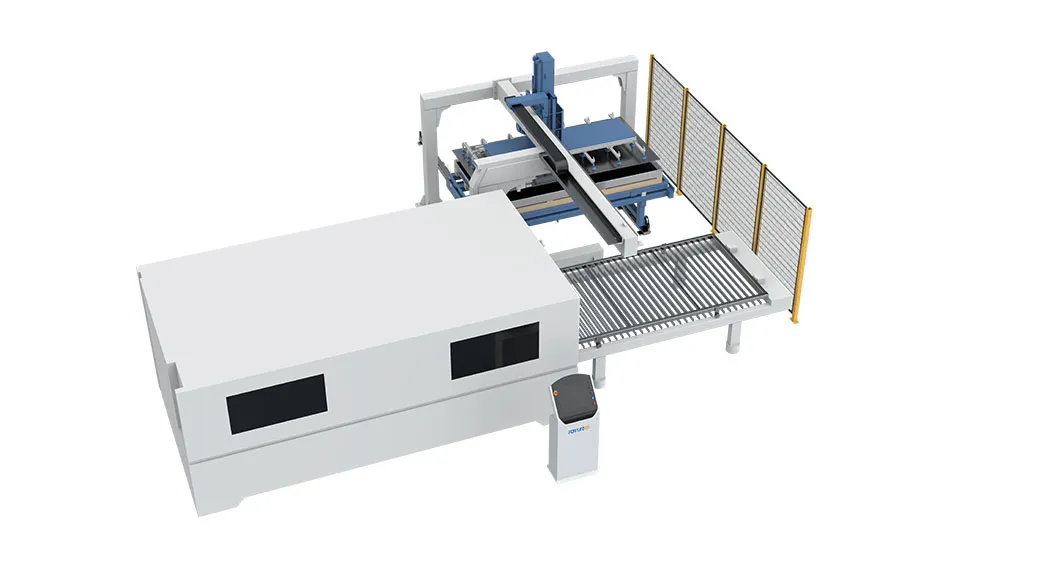
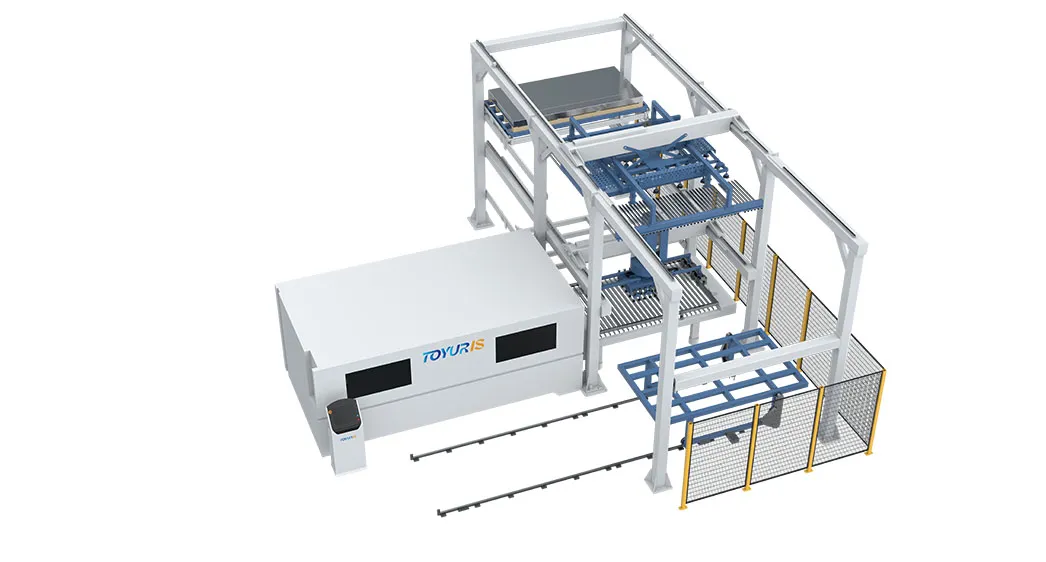
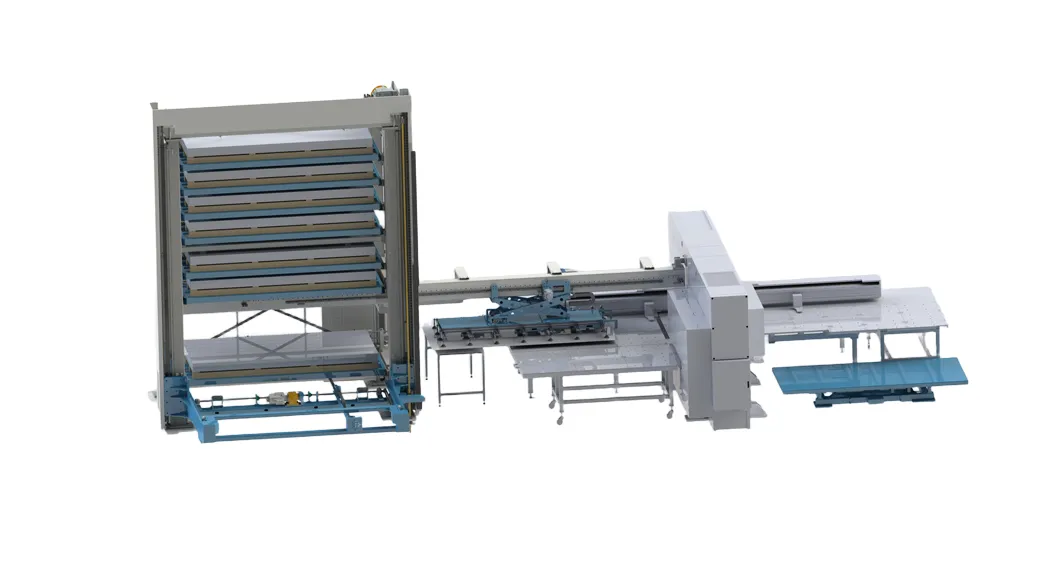
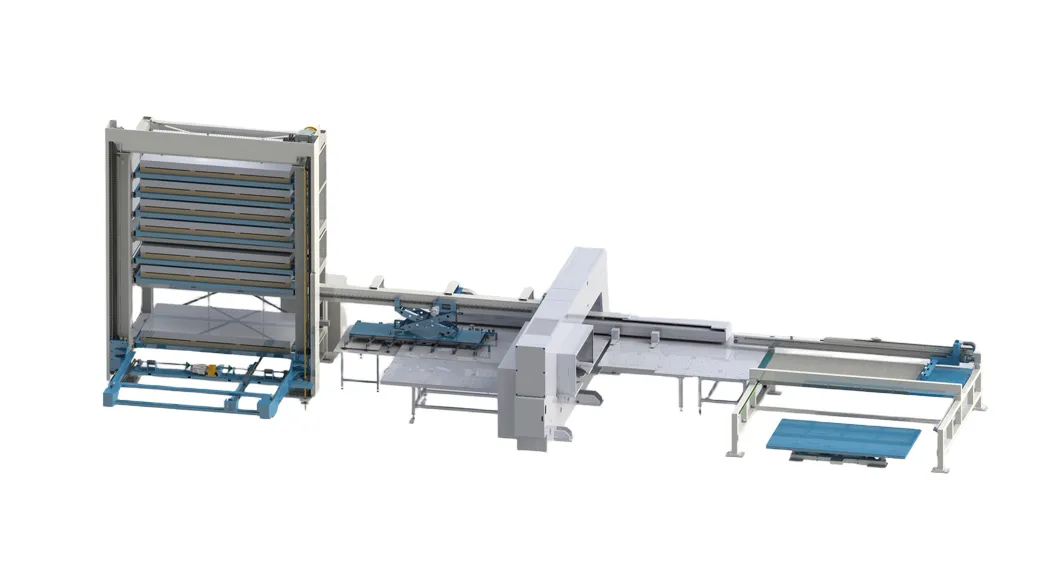
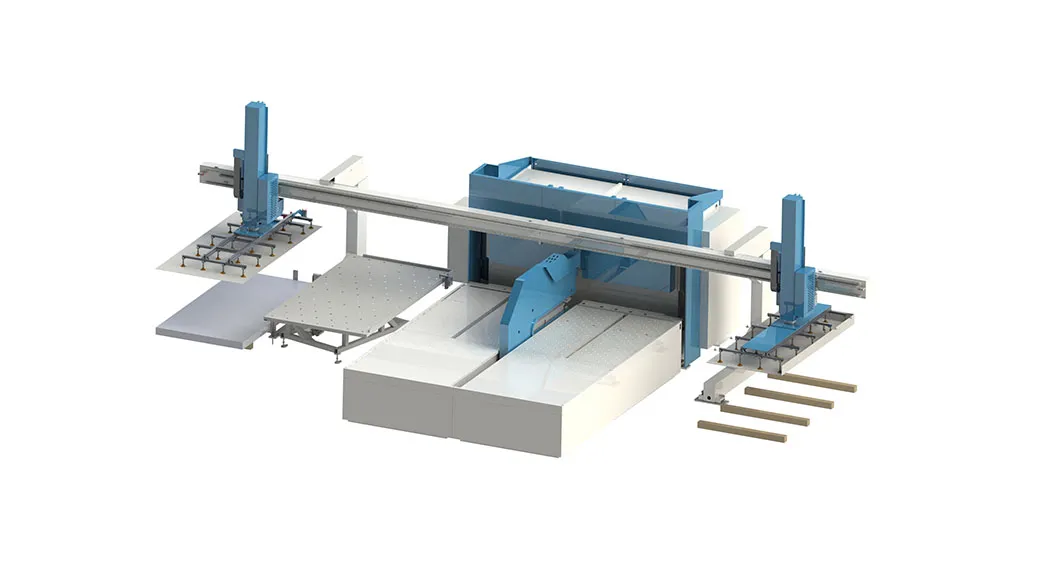
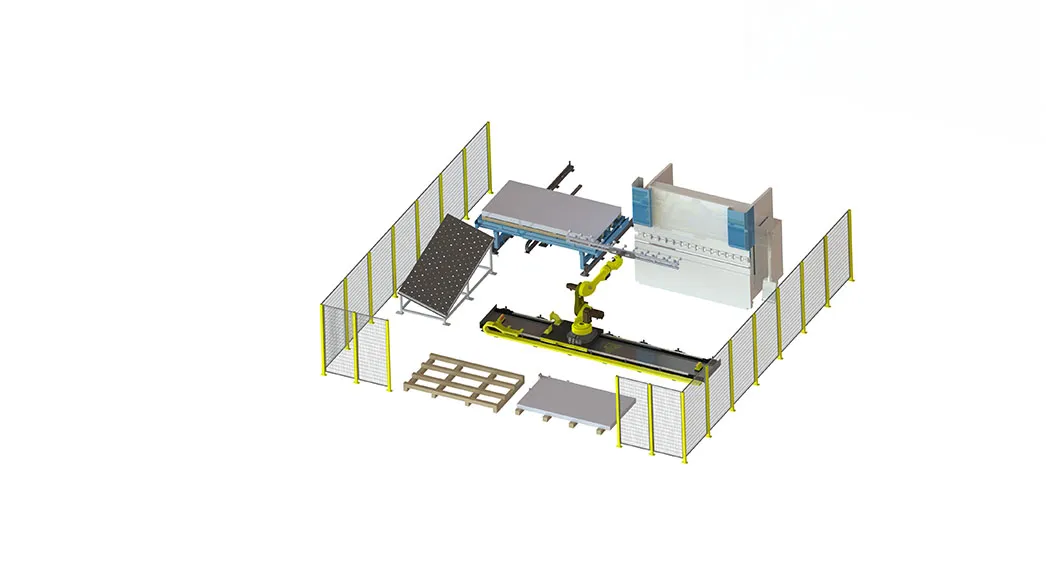
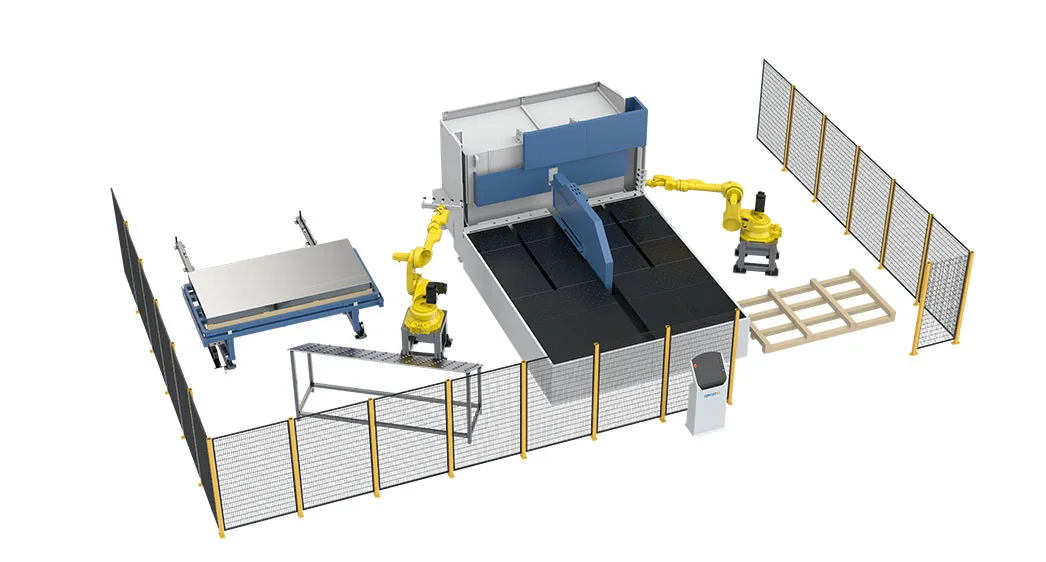
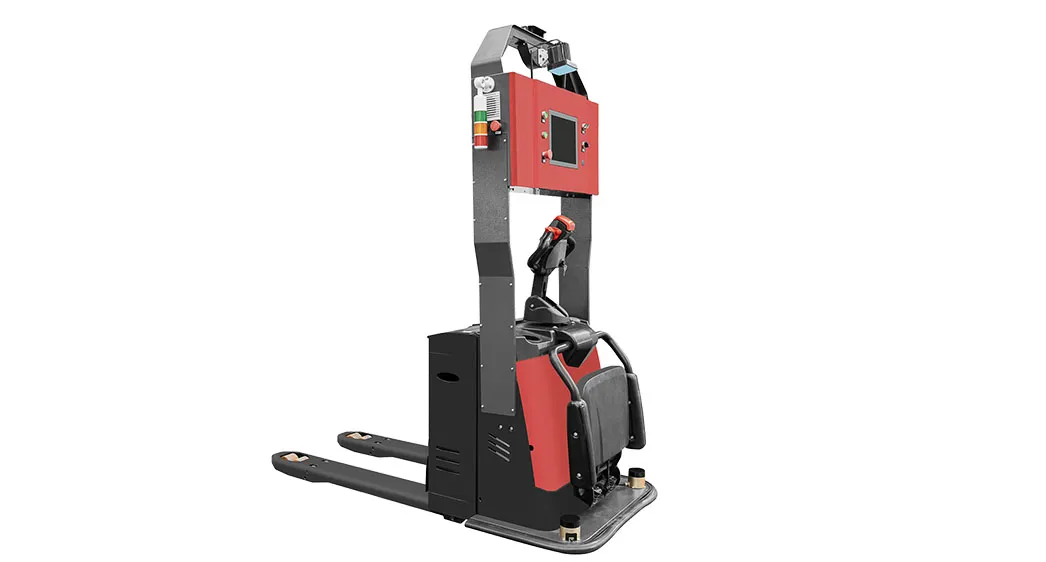
An automated warehouse system for sheet metal stores pallets in controlled locations, retrieves the correct grade and thickness on demand, transfers material to production, and updates inventory and order status through warehouse and manufacturing software. The best system is sized from pallet diversity, weight, retrieval frequency, production demand, remnants, and future growth. AGV forklifts can extend automation between storage and cutting, punching, bending, or finished-goods areas, but routes, transfer interfaces, traffic priority, floor conditions, and safety functions must be engineered as one material-flow system.
Sheet metal warehouses are often treated as passive storage. In reality, they determine how quickly production receives the correct material, how much floor space is occupied, how often forklifts travel, how accurately inventory is known, and whether night production can continue. A laser or punch line cannot run automatically when the right pallet cannot be found, identified, or delivered.
This guide provides a practical blueprint for factories considering vertical towers, stacker systems, WMS or WIS control, AGV forklift transport, and MES integration. It explains the specific challenges of sheet material, compares storage models, presents sizing and ROI methods, and defines the information buyers should prepare before requesting a solution.
An automated warehouse system for sheet metal is a controlled combination of storage racks, pallets or cassettes, lifting or stacker equipment, transfer stations, inventory software, and production interfaces that automatically stores and retrieves sheet material. It may serve one machine, several processing cells, or a complete sheet metal factory.
The system’s basic promise is simple: the required material is delivered to the required location at the required time. Achieving that promise requires accurate physical and digital alignment. Every pallet must have an identity, defined capacity, known material, location, status, and movement history. The controller must prevent incompatible commands, verify transfer completion, and preserve inventory accuracy when exceptions occur.
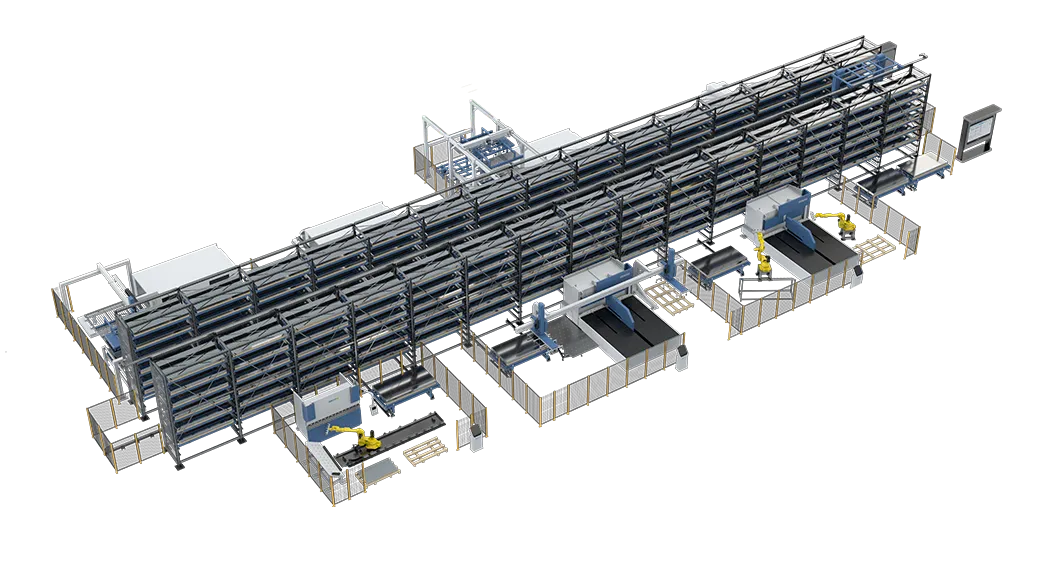
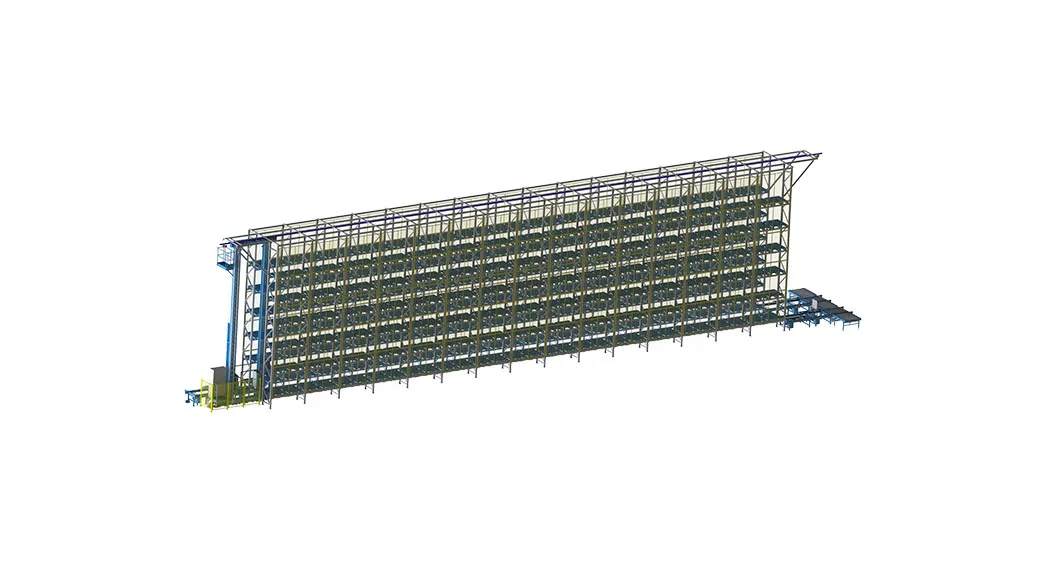
Automation scope varies. A single-tower system may present pallets directly to one laser. A dual-tower or multi-tower system may serve several machines through shuttles, conveyors, transfer carts, or AGVs. A broader warehouse may manage raw sheets, remnants, work-in-process, and finished goods. The correct scope depends on material diversity and production flow rather than the desire to maximize storage height.
Buyers should define whether the project is a machine-attached buffer, a production warehouse, or a factory logistics network. A machine-attached tower usually prioritizes rapid, repeatable missions for one process. A central warehouse prioritizes inventory diversity and shared access. A logistics network prioritizes coordination among storage, several production areas, and shipping. These objectives lead to different layouts and software responsibilities.
Sheet metal storage is different because loads are dense, flat, heavy, surface-sensitive, dimensionally varied, and often divided by grade, thickness, finish, heat or batch, and remnant status. These characteristics affect rack design, pallet deflection, lifting, identification, fire planning, and retrieval logic.
A pallet of sheet metal can concentrate several tonnes over a relatively small footprint. Floor capacity, foundations, rack structure, anchors, seismic requirements where applicable, and transfer-device ratings must be confirmed. Nominal payload should include the pallet or cassette, sheet stack, packaging, spacers, and credible overload conditions. Buyers should specify maximum single-pallet weight and normal average weight rather than only total warehouse tonnage.
Sheet surface affects value. Stainless steel, pre-painted sheet, galvanized material, aluminum, and film-protected panels can be damaged by dirt, sharp edges, sliding, moisture, or incorrect separators. Storage and transfer equipment should minimize contact and control contamination. The operating procedure should define how damaged pallets, bent sheets, protruding packaging, or unstable stacks are rejected before entering automatic storage.
Material identity is more complex than dimensions. Two pallets can have the same sheet size and thickness but different grades, coatings, heat numbers, or customer approvals. Barcode or RFID can support identification, but the receiving process must create the correct record. Automation cannot detect every master-data mistake. Critical materials may require operator verification, certificate linkage, or independent measurement.
Remnants create another challenge. A remaining sheet may have irregular dimensions and uncertain future value. The factory needs a rule for minimum remnant size, labeling, digital dimensions, return location, reservation, and disposal. Without a rule, towers fill with low-use remnants and retrieval efficiency falls.
Incoming packaging can also conflict with automation. Timber blocks, straps, paper, film, and uneven supplier pallets may exceed the defined load envelope or interfere with sensors and forks. The receiving area should include a standardization step: inspect, weigh where required, transfer to an approved carrier, assign identity, and confirm dimensions before the pallet becomes available to production.
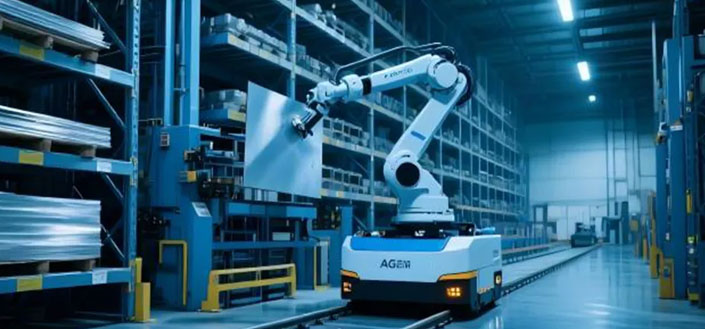
The main components of an automated sheet metal warehouse are storage structures, load carriers, vertical or horizontal transfer equipment, input and output stations, safety systems, controls, inventory software, and interfaces to production and enterprise systems. Their capacities must be balanced so no single mission repeatedly delays production.
Racks or towers provide locations for pallets, cassettes, or trays. The design should define usable sheet dimensions, maximum stack height, load rating, carrier tare weight, deflection limits, anti-drop features, inspection points, and replacement method. Carrier standardization simplifies handling, but incoming supplier pallets may need a transfer process.
The storage machine moves carriers between locations and transfer stations. Key specifications include rated load, travel speed, positioning method, mission cycle, redundancy, maintenance access, and recovery after power loss. Maximum speed should not be considered without the full mission: pickup, travel, deposit, confirmation, and return.
Transfer stations define the boundary between warehouse equipment and forklifts, cranes, loaders, conveyors, or AGVs. Pallet position, height, alignment, load presence, identity, and access control must be standardized. If several machines share one warehouse, buffer stations may be required so a delayed machine does not block the stacker.
WMS or WIS software tracks locations and creates missions. It should manage material identity, quantity or estimated weight, reservations, FIFO or other rules, remnants, blocked stock, and interface status. The software needs clear rules for manual corrections because physical and digital inventory can diverge after emergency recovery, damaged material, or unrecorded consumption.
Safeguarding can include fences, interlocked gates, scanners, light curtains, overload detection, anti-fall devices, emergency stops, maintenance modes, and controlled access to elevated areas. Diagnostics should identify the failed location or step and guide safe recovery. Remote support can reduce downtime, but access permissions and cybersecurity controls should be defined.
Utilities and infrastructure are part of the system even when they are supplied by the customer. Electrical distribution, network coverage, grounding, fire protection, foundations, compressed air where used, lighting, temperature, drainage, and access for component replacement should appear in the responsibility matrix. A warehouse that fits the floor plan but cannot be maintained safely is not a complete design.
Manual racks, vertical towers, and multi-tower automated storage and retrieval systems differ in capital cost, space use, retrieval speed, inventory control, integration capacity, and operational complexity. The best option depends on material diversity and mission demand.
| Storage Model | Best Fit | Advantages | Limits and Risks |
|---|---|---|---|
| Floor stacks or manual racks | Low inventory diversity, low retrieval frequency, flexible manual operation | Low capital cost, simple access, easy visual inspection | Large footprint, forklift travel, difficult FIFO, higher search and handling variation |
| Drawer or cassette rack | Moderate variety and manual crane or forklift service | Better organization and access than floor stacks | Still labor-dependent; inventory accuracy relies on discipline |
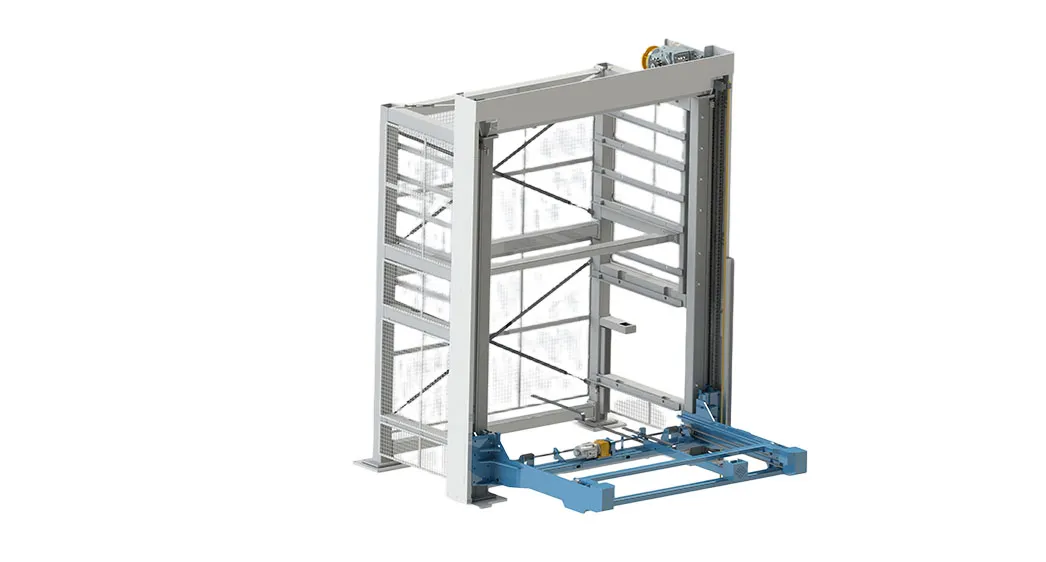
| Single vertical storage tower | One main processing cell, limited floor space, planned unattended production | Compact footprint, automatic retrieval, controlled inventory, direct machine supply | Single equipment dependency; slot count and mission rate can constrain growth |
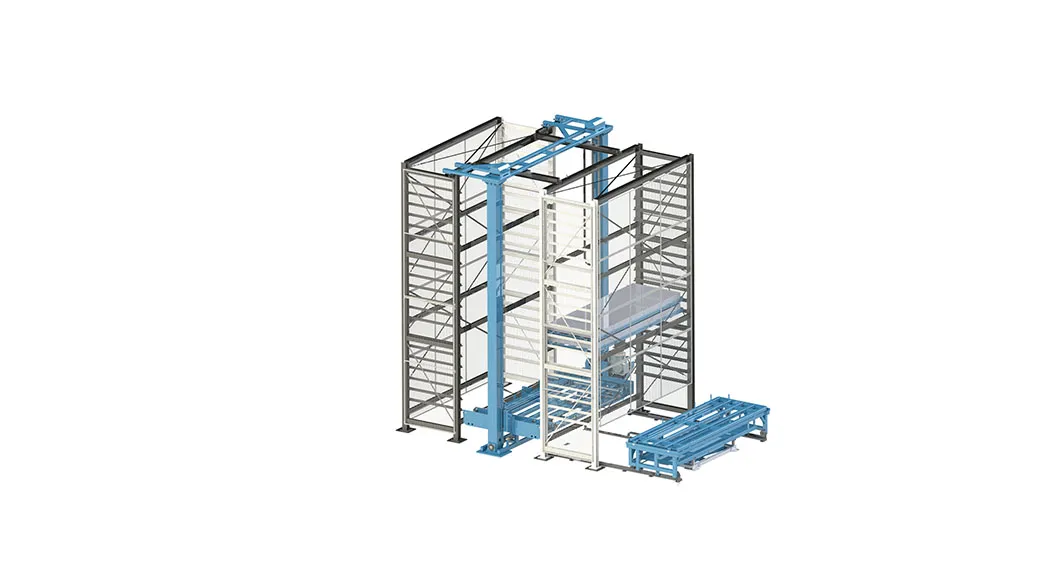
| Dual-tower or multi-tower AS/RS | Several machines, large pallet variety, centralized material flow | High capacity, scalable missions, shared inventory, stronger integration | Higher capital and controls complexity; requires traffic, buffer, and recovery planning |
| Warehouse plus AGV network | Distributed machines or longer travel distances | Flexible routes, reduced fixed conveyors, automatic inter-area transfer | Requires route control, transfer standardization, charging, traffic safety, and fleet logic |
A vertical system may improve floor-space utilization by storing upward, but the meaningful metric is not percentage alone. Compare the current gross floor area used by material, aisles, retrieval zones, and safety clearance with the future system footprint, service zone, input/output stations, and external buffers. Toyuris states that certain warehouse and logistics configurations can increase space utilization by more than 300% and improve storage and retrieval efficiency by 50% to 80%. These are supplier-published figures and should be validated through the customer’s project layout and mission simulation.
Availability strategy is important for multi-machine service. If one stacker supplies two lasers, a stacker fault can affect both. The design may use emergency manual access, external buffer capacity, duplicate transfer paths, spare critical components, or a recovery plan that allows production to continue at reduced capacity.
Manual storage should not be rejected simply because it is less automated. For low mission frequency, a well-labeled rack with disciplined barcode control may provide the best return. The decision changes when production regularly waits for forklifts, floor space prevents expansion, or night automation needs reliable material delivery. The comparison should be based on the value-stream constraint rather than an assumed automation hierarchy.
An automated warehouse system is sized from the number of distinct pallet positions, maximum load, inventory policy, peak retrieval and return missions, production schedule, buffer requirements, and future growth. Total tonnes alone are not enough.
Start with a pallet census. For each material family, list grade, thickness, sheet dimensions, normal pallet weight, maximum pallet weight, average stock, peak stock, monthly receipts, retrieval frequency, and remnant behavior. Count separate locations needed for materials that cannot be combined. Include quarantine, blocked, customer-owned, and inspection stock where applicable.
An illustrative warehouse might require sixty active pallet locations with a maximum load of three tonnes each. The structural maximum stored load would be 180 tonnes plus carrier tare weight, but average inventory may be lower. Add a capacity margin for seasonal peaks, new materials, and operational flexibility. A design filled to 100% from the first day has no space to relocate pallets during maintenance, quarantine, or schedule changes.
Next, calculate missions. One production request may require a retrieval mission and a return mission. Receiving adds input missions; remnants add extra returns; inventory rearrangement creates internal moves. If two lasers each request an average of three pallets per hour during a peak period, the system may need at least six outbound missions plus returns and contingencies. Compare this demand with the sustained mission rate, not the theoretical shortest move between the closest locations.
Use a time-distribution model. Material requests may cluster at shift start or after a batch completes. Buffers can absorb peaks, but buffers require space and inventory rules. Define the number of staged raw pallets and completed or returned pallets at each machine. Simulate a representative week to test whether the storage machine, transfer stations, AGVs, and production cells remain balanced.
Future growth should be concrete. State the expected additional machines, pallet types, material families, and production volume over three to five years. “Expandable” is not meaningful unless the design identifies reserved floor space, structural connection, control capacity, network addresses, power, and the method for adding locations without long production shutdowns.
Weight distribution should be separated from slot count. A tower may have enough locations but exceed the total structural load when many heavy pallets are stored simultaneously. The software may need location rules based on load, carrier type, or center of gravity. The structural review should consider maximum credible loading rather than average inventory.
An AGV forklift integrates with sheet metal storage through standardized pickup and drop-off stations, mission commands, load verification, traffic control, safe navigation, charging, and confirmation that each transfer has completed. The warehouse, AGV fleet manager, and production equipment must agree on ownership of the load at every handoff.
The first design step is load geometry. Define pallet width, length, fork entry, center of gravity, maximum load, pallet condition, insertion tolerance, and required lift height. Sheet stacks can be dense and low, making fork position and floor flatness important. The transfer station may use guides, sensors, or mechanical stops to improve repeatability.
Route planning should separate normal travel, pedestrian crossings, emergency exits, manual forklift zones, charging, and maintenance. AGVs need clear priority rules at intersections and narrow aisles. Warning lights and sounds are useful but do not replace engineered speed limits, detection fields, controlled crossings, and visibility. The system should define behavior when a pedestrian remains in the path, an aisle is blocked, a pallet protrudes, or another vehicle stops unexpectedly.
ISO 3691-4 specifies safety requirements and verification methods for driverless industrial trucks and their systems. OSHA’s powered industrial truck resources address forklift hazards and workplace controls. Applicable requirements depend on jurisdiction and final vehicle classification. The risk assessment should include mixed traffic, loading and unloading, battery charging, maintenance, manual recovery, and emergency response.
Fleet size should be based on mission time and variability. Calculate travel, alignment, pickup, confirmation, delivery, handoff, return, charging, and expected waiting. A single AGV may be sufficient for a low-frequency route, while several machines may require multiple vehicles and traffic coordination. Add a charging strategy that supports the shift pattern without creating a common downtime window.
Navigation technology should fit the environment. Laser reflectors, natural-feature navigation, QR codes, magnetic guidance, SLAM, or hybrid methods have different infrastructure, accuracy, and change-management requirements. The selection should consider rack geometry, reflective surfaces, dust, route changes, positioning tolerance, and cybersecurity. Buyers should ask how maps are updated and validated after the factory layout changes.
WMS, MES, ERP, and equipment controls should share data through a defined system-of-record model in which each platform owns specific information and exchanges only the fields needed for execution and confirmation. Ambiguous ownership creates duplicated inventory, conflicting schedules, and difficult fault recovery.
ERP normally owns commercial orders, purchasing, and high-level inventory value. MES owns production scheduling, routing, work status, and consumption confirmation. WMS or WIS owns physical warehouse location, pallet status, and material missions. Equipment PLCs own safe motion, interlocks, and immediate sequence state. The AGV fleet manager owns vehicle assignment, route, traffic, and charging behavior.
A typical flow begins when MES releases an order and requests a defined material. WMS confirms availability, reserves a pallet, and creates a retrieval mission. The warehouse delivers the load to a transfer point. The AGV or loader confirms pickup and delivery. The machine verifies material and consumes the sheet. Completion and consumption return to MES, and inventory quantity or status is updated in WMS and ERP according to the agreed transaction model.
Exception handling is the real test. What happens if the material is damaged, the machine rejects it, an AGV cannot complete delivery, the operator takes a sheet manually, or the network fails after physical movement but before digital confirmation? Each exception needs a safe recovery process and an audit trail. Manual inventory corrections should require authorization and a reason code.
NIST notes that MES and ERP together can help manufacturers respond more quickly to demand and support just-in-time operations. Implementation should begin with accurate identifiers and a limited transaction set. Connecting unreliable data to more systems spreads errors faster.
Interfaces should be documented through data dictionaries and state diagrams. Each message needs a source, destination, identifier, timestamp, acknowledgement, retry rule, and error behavior. Time synchronization matters when systems compare sequence and completion records. Backups, user permissions, remote access, and software-change control should be included in the lifecycle plan.
Warehouse automation KPIs should measure material availability, mission performance, inventory accuracy, space use, damage, labor, safety, and production impact before and after implementation. A single retrieval-speed claim does not show whether the factory improved.
Material request-to-delivery time: elapsed time from approved request to confirmed arrival at the production station.
Mission success rate: percentage of missions completed without manual intervention, retry, or wrong-load event.
Inventory accuracy: agreement between physical pallet, location, identity, and digital record.
Production starvation time: machine waiting time caused by unavailable or late material.
Space use: gross square metres used per active tonne or per pallet position, including aisles and buffers.
Handling damage: scratches, bent sheets, packaging failures, dropped or unstable loads, and wrong-material events.
Labor and vehicle travel: forklift hours, crane moves, search time, and operator interventions.
Safety events and near misses: pedestrian conflicts, unstable loads, blocked exits, manual recovery, and alarm trends.
Schedule adherence: percentage of material missions delivered in time for the planned production sequence.
Collect baseline data before design. After commissioning, track daily during ramp-up and weekly after stabilization. Use reason codes for delays. If retrieval time improves but production still waits, the cause may be late order release, wrong master data, blocked transfer stations, or downstream schedule changes.
Global automation adoption continues to rise. The International Federation of Robotics reported an average manufacturing robot density of 177 robots per 10,000 employees in 2024, with the metal and machinery industry reaching 88,777 new installations that year. These figures show the direction of investment, but they do not replace a factory-specific value-stream study.
Availability must be defined consistently. Decide whether planned maintenance, operator absence, unavailable material, external network failure, and customer-caused blocking are included. Use the same definition during baseline and acceptance. Otherwise, the project may appear to improve or decline because the calculation changed rather than the operation.
Automated warehouse system ROI is calculated from realizable floor-space value, avoided handling labor and vehicle cost, reduced production waiting, lower damage and inventory loss, and additional operating capacity, minus recurring cost. The calculation should reflect how the building and labor will actually be used.
Floor-space value can be significant when automation avoids an expansion, releases space for revenue-producing equipment, or reduces rented storage. If released space remains empty and has no alternative use, it is an operational benefit but not an immediate cash return. Measure the gross current area including aisles and staging, then compare the complete automated footprint including service and buffer zones.
Handling savings include forklift hours, crane operations, search time, manual counting, and overtime. Use burdened cost and count only reductions that can be realized. Production-wait savings can be more valuable than warehouse labor when a high-cost laser or punch press is the constraint. Multiply recovered constraint hours by contribution margin or avoided overtime, not by machine sales price.
Quality and inventory savings may include fewer damaged sheets, wrong-grade runs, lost pallets, emergency purchases, and obsolete remnants. Use historical records and conservative improvement assumptions. Add the value of improved traceability only when it supports a customer, compliance, or quality requirement.
Total project cost should include racks, carriers, stacker or lift, transfer stations, AGVs, charging, guarding, controls, WMS/WIS, MES or ERP interfaces, site work, foundations, power, network, fire-system changes, freight, installation, training, commissioning inventory, shutdown, and internal resources. Recurring cost includes maintenance, inspections, batteries, replacement carriers, software support, energy, network and cybersecurity support, and spare parts.
Run a phased alternative. A single tower serving one laser may deliver most of the urgent benefit and establish inventory discipline. A later phase can add a second tower, AGV network, or MES connection. Compare the staged total cost and disruption with the integrated project. Staging is valuable when requirements are still developing; integration can be better when interfaces and growth are already clear.
Use conservative, expected, and upside cases. The conservative case should count only documented production waiting, realizable overtime, and known floor-space cost. The expected case may include confirmed capacity demand and measured quality savings. The upside case may include future machines and longer unattended operation. A project that fails the expected case needs a narrower scope or stronger evidence.
Automated warehouse system safety and facility verification must cover structural loads, falling material, moving equipment, transfer zones, pedestrian interaction, fire protection, electrical systems, maintenance access, emergency recovery, and software-controlled motion. Tall storage and heavy sheet loads create hazards that require both mechanical and operational controls.
Verify floor bearing capacity, flatness, anchors, pits, seismic or wind requirements where relevant, roof and sprinkler clearances, fire compartments, escape routes, and access for installation. The fire strategy should consider the stored materials, oils, films, packaging, rack height, and local code. Do not assume that a compact tower can be placed wherever floor space is available.
Safeguarding should prevent access to stacker and transfer motion while allowing controlled loading, inspection, and maintenance. Anti-drop devices, load presence sensors, overload detection, carrier locks, interlocked doors, emergency stops, safe maintenance modes, and fall protection may be required. Recovery procedures should address a pallet stopped between levels, power loss, sensor failure, or a load that shifts.
For AGVs, verify floor joints, slopes, traction, lighting, reflective surfaces, narrow aisles, radio coverage, pedestrian routes, manual forklift interaction, and emergency access. Operators and maintenance staff need role-specific training. Emergency responders should know how to isolate power and safely access the area.
Safety validation should use real operating scenarios. Test transfer station access, blocked aisles, failed identification, overloaded or misaligned pallets, emergency stops, guard opening, AGV obstacle response, restart prevention, and manual recovery. Inspection intervals and responsible roles should be documented before handover.
An automated warehouse and AGV supplier should demonstrate structural engineering, heavy-load handling, inventory software, production integration, traffic design, safety validation, commissioning methods, and lifecycle service. Buyers should compare complete operating concepts rather than rack capacity alone.
Request references with similar sheet dimensions, load weight, storage height, mission frequency, machine connections, and country requirements. Ask for a mission-rate model using the customer’s layout and order pattern. Review the slowest and farthest missions, not only the shortest cycle. Confirm the assumed number of input and output stations and buffers.
Evaluate software through workflows. Demonstrate receiving, pallet creation, reservation, retrieval, return, remnant creation, blocked stock, manual correction, inventory count, urgent order, machine unavailable, AGV route blocked, and network recovery. The system should show clear state and ownership throughout each scenario.
Clarify structural and site responsibilities. Identify who verifies the floor, anchors, fire protection, electrical supply, network, installation lifting, local permits, and code compliance. Define acceptance criteria for inventory accuracy, mission success, sustained mission rate, load handling, safety functions, data exchange, and recovery.
After-sales planning should include remote diagnostic access, response targets, on-site support, spare parts, battery support for AGVs, software backup and restore, PLC program ownership, cybersecurity updates, and component obsolescence. A warehouse is central infrastructure; serviceability can be more important than a small difference in initial price.
Compare scope matrices line by line. One supplier may include carriers, fire interfaces, installation lifting, WMS integration, training, and spare parts, while another lists them as customer responsibilities. The apparent price difference may reflect risk transfer rather than better value. A complete technical and commercial boundary document is essential before contract award.
Toyuris builds an automated warehouse system by combining vertical storage, stacker or lifting mechanisms, TY-WIS control, production interfaces, and optional AGV transport for connected sheet metal material flow. Published product categories include warehouse automation storage systems, single-tower storage, dual-tower storage, and automated guided vehicle forklifts.
The company positions its automated warehouse system as the logistics foundation for laser cutting, punching, bending, and broader smart production. For an effective concept, Toyuris engineers need a material and mission profile: sheet dimensions, pallet weight, grade and thickness count, stock policy, daily receipts, retrieval frequency, machine locations, peak schedule, remnants, layout, floor data, safety requirements, software environment, and growth plan.
Toyuris states that some configurations support 24/7 unmanned operation, FIFO management, full-process traceability, space-utilization improvement above 300%, and retrieval-efficiency improvement of 50% to 80%. These published capabilities should be translated into project-specific acceptance criteria. The technical agreement should identify the baseline, measurement method, operating assumptions, and exclusions.
Factories can use the warehouse project as an entry point to broader smart factory automation. The most reliable path is to standardize material identities, transfer stations, inventory rules, and production requests first, then expand data and physical integration after the core missions are stable.
A useful feasibility study should deliver a location plan, pallet census, load calculation, peak mission model, transfer method, AGV route concept, system ownership diagram, safety concept, utilities, scope boundary, implementation schedule, and acceptance proposal. That package allows production, IT, safety, maintenance, finance, and management to review the same operating model.
An automated warehouse system for sheet metal is a production-control and material-flow system, not simply a taller rack. It must keep heavy, valuable, and varied material physically and digitally aligned. Capacity depends on pallet diversity and mission peaks. Reliability depends on load carriers, transfer stations, recovery design, data ownership, and disciplined receiving and remnant processes.
Start with a pallet census and mission study. Compare manual racks, single towers, multi-tower systems, and AGV networks against measured production waiting, floor-space constraints, inventory accuracy, and growth. Define safety and facility requirements early, model conservative ROI, and specify exception workflows before purchase. When storage, transport, equipment, and MES work as one system, the factory can reduce search and handling, support longer automated runs, improve traceability, and create a scalable material-flow backbone.
These questions address the sizing, software, safety, and purchasing issues most commonly raised during automated warehouse feasibility studies.
Count distinct active pallets by grade, thickness, size, status, and remnant policy, then add space for peaks, quarantine, relocation, and growth. A system designed at 100% occupancy has little operational flexibility. Use actual inventory records rather than dividing total tonnes by average pallet weight.
Yes, when the stacker, transfer stations, and buffers can complete enough peak missions for both machines. A simulation should use the actual distribution of cutting cycles and material changes. Fast thin-sheet production can create higher mission demand than slow thick-sheet cutting.
WMS or WIS manages warehouse locations, inventory status, and material missions. MES manages production orders, schedules, routing, and work status. The systems exchange requests and confirmations, while equipment PLCs control safe physical movement. Exact terminology varies by supplier.
They can be integrated safely when risk assessment, speed and detection fields, controlled crossings, transfer interfaces, traffic rules, warning systems, floor conditions, and recovery procedures are engineered for the workplace. Applicable standards and local regulations must be verified for the final configuration.
Each pallet needs a unique identity and controlled transactions for receiving, storage, reservation, retrieval, consumption, return, remnant creation, and manual correction. Physical confirmation sensors help, but disciplined master data and exception procedures are essential.
Provide sheet and pallet dimensions, maximum and average loads, material list, active pallet count, stock peaks, receipt and retrieval frequency, machine locations, shift pattern, layout, floor and fire information, transfer method, AGV routes, software interfaces, safety requirements, and future expansion.
The following standards-based and industry sources provide further information on driverless industrial trucks, powered industrial truck safety, and current industrial robot adoption.