What are you looking for?
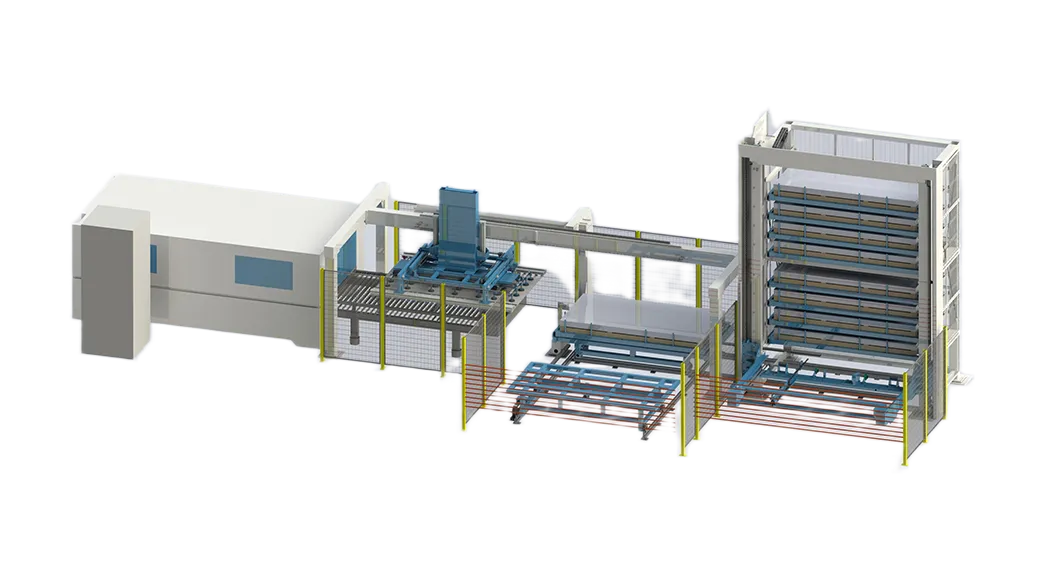
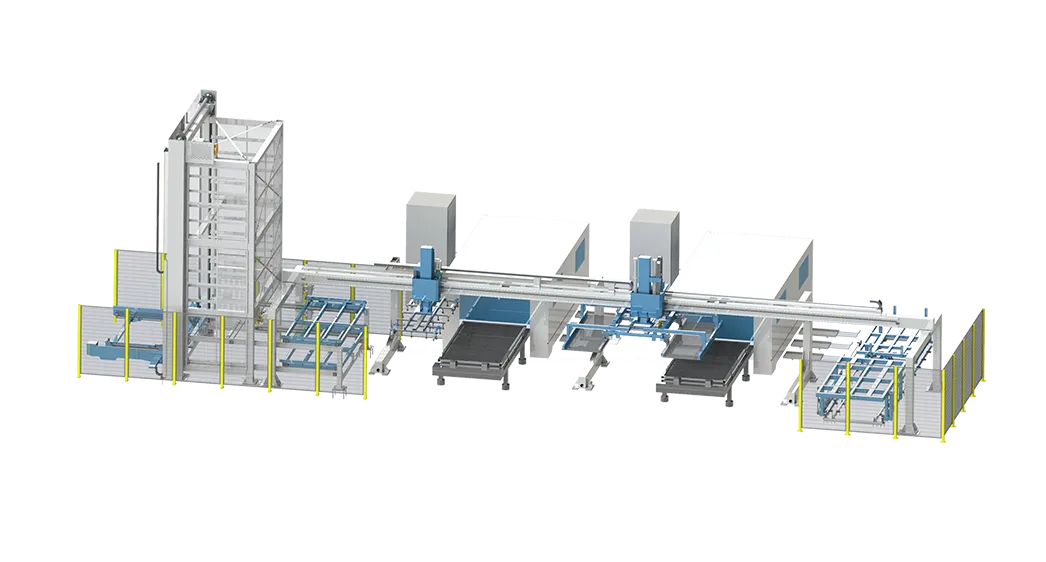
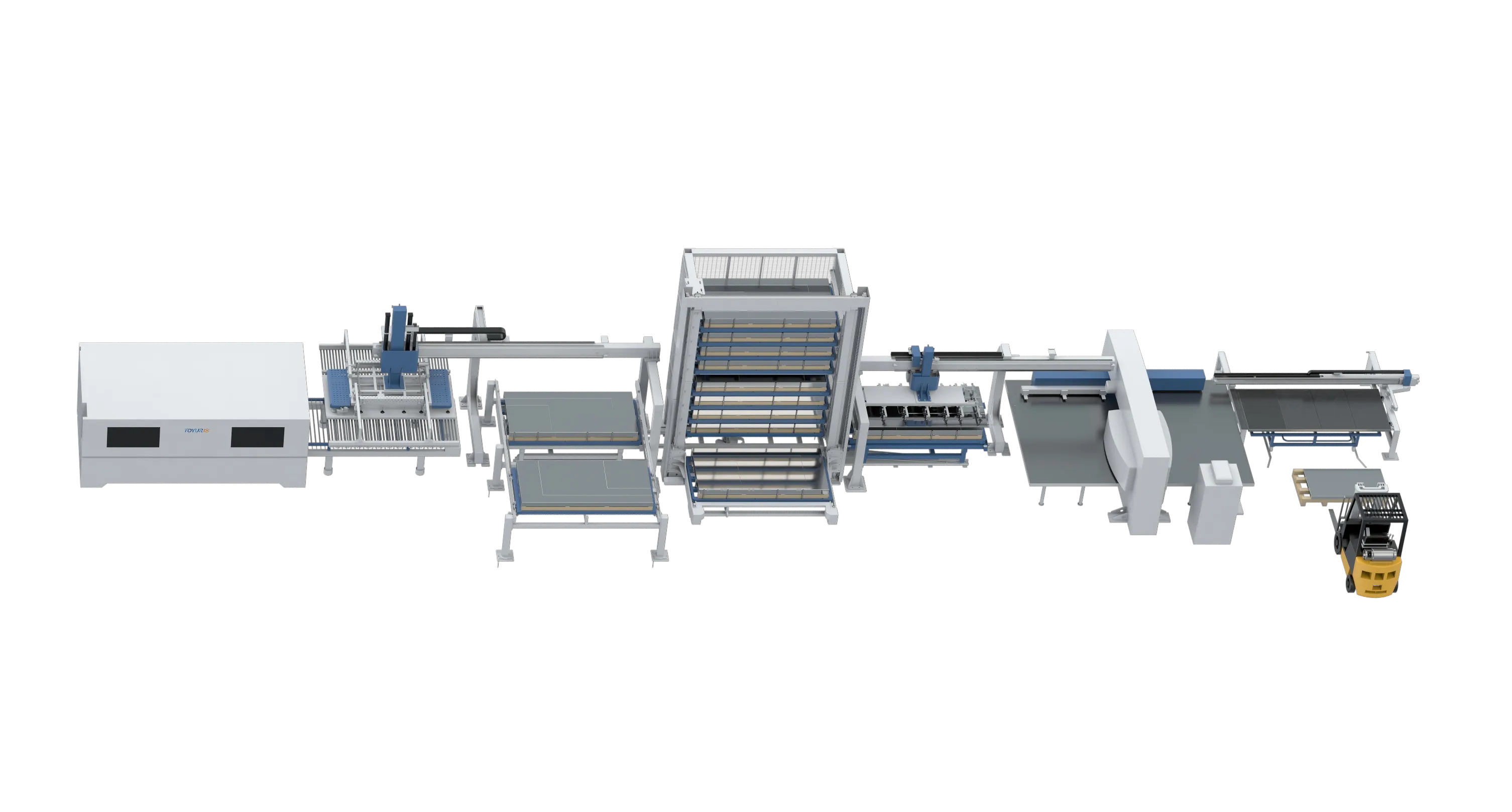
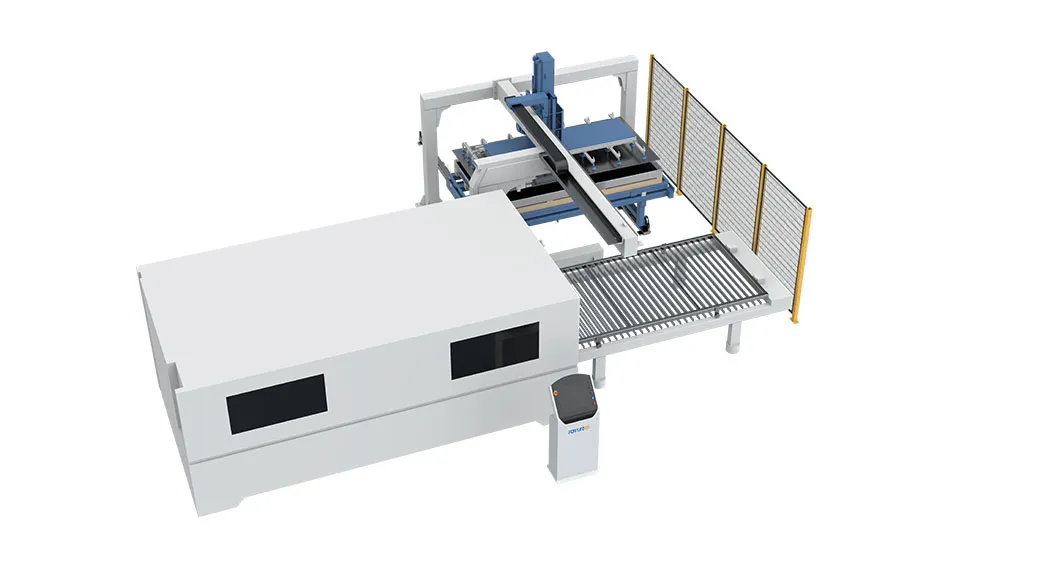
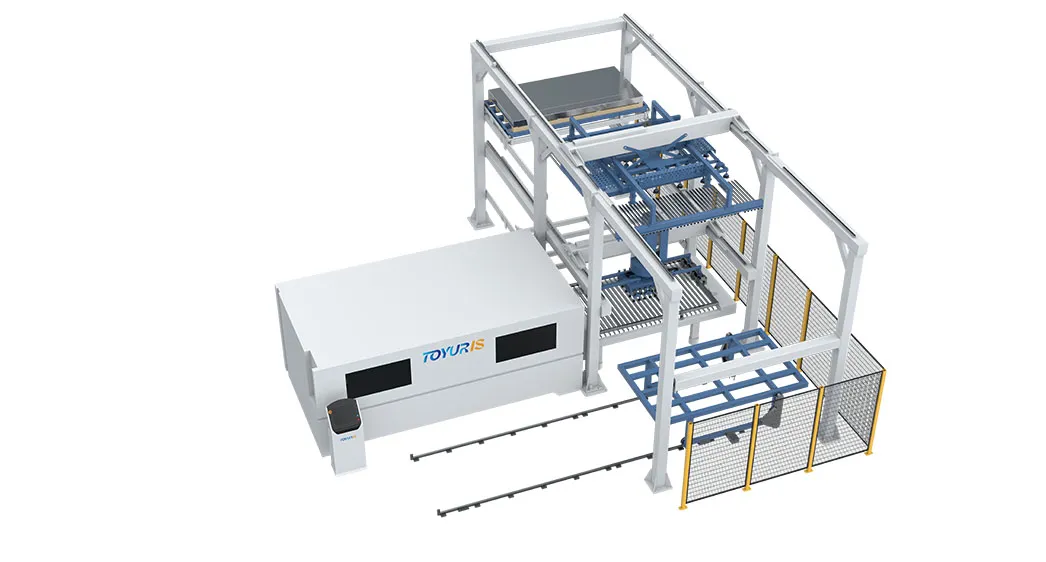
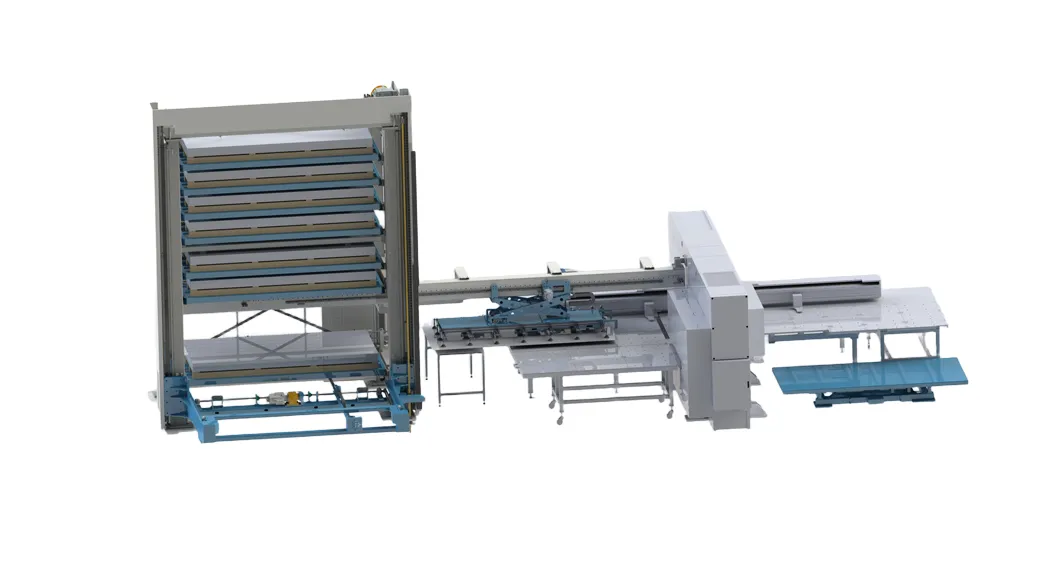
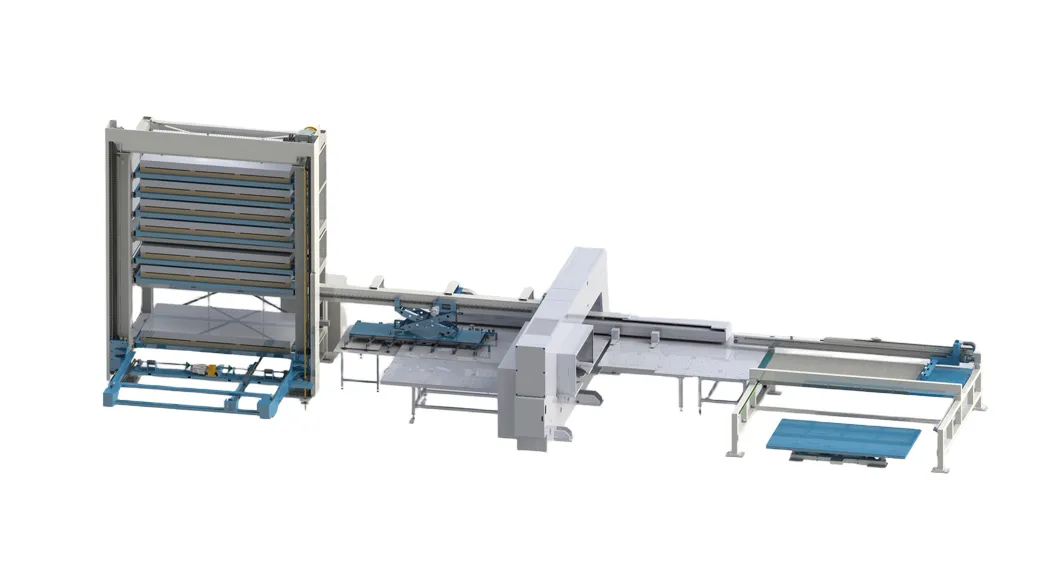
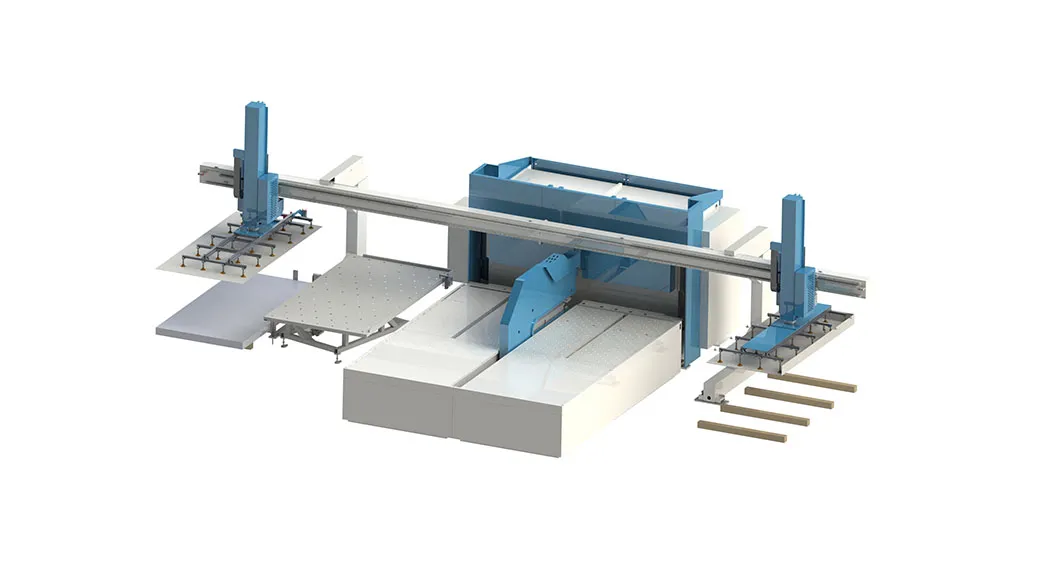
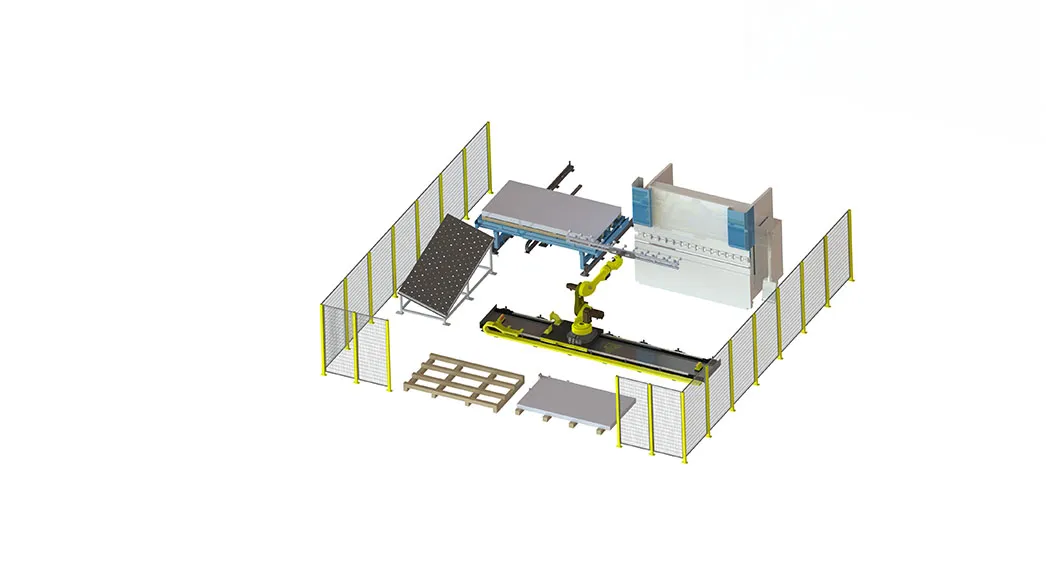
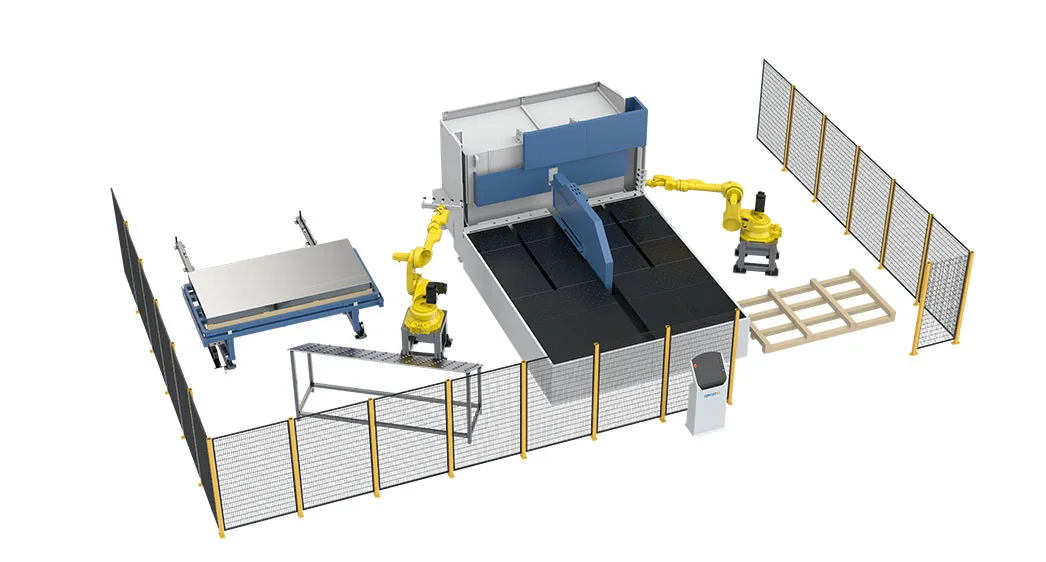
Laser cutting automation improves output by coordinating material storage, loading, cutting, unloading, sorting, and production data so the laser spends more scheduled time producing acceptable parts. The fastest laser source does not automatically create the highest factory throughput. A profitable project measures the current losses around the machine, selects a layout that matches order mix and expansion plans, protects material and parts, controls queues and buffers, and converts recovered hours into sellable capacity or realizable cost savings.
Investment discussions often begin with laser power, acceleration, and nominal cutting speed. Those specifications matter, but they describe only one asset. A factory earns money from completed, acceptable parts delivered at the required time. If the machine waits for material, the unloading table is blocked, operators cannot separate parts fast enough, or the schedule sends the wrong sheet, a technically fast laser becomes an expensive waiting station.
This guide presents a system-level method for evaluating automated laser cutting. It explains how to map constraints, calculate capacity, compare layouts, design material flow, integrate production data, estimate ROI, and prepare a supplier specification. The examples are illustrative engineering models. Final performance depends on material, thickness, part geometry, nesting, machine configuration, factory conditions, and operating discipline.
Laser cutting automation is the coordinated use of material storage, automatic loading, laser processing, unloading, sorting, and digital control to reduce non-cutting time and stabilize sheet metal production. It can range from a loader connected to one machine to a multi-machine flexible manufacturing system with tower storage, part sorting, downstream routing, and MES integration.
The purpose is not to remove every person from the area. The purpose is to assign predictable, repetitive, and data-driven tasks to the system while people handle planning, engineering changes, maintenance, quality decisions, and exceptions. A well-designed line reduces the number of times an operator must search, lift, align, wait, re-enter information, or manually report status.
Automation scope should follow the loss profile. A factory that mainly loses time loading heavy sheets may need a focused load/unload solution. A factory with many grades and thicknesses may gain more from tower storage and automatic retrieval. A high-volume plant may need sorting and large buffers because unloading becomes the constraint. A high-mix plant may need stronger scheduling, identification, and remnant control rather than maximum mechanical speed.
The term “automated laser cutting line” should therefore be defined in the quotation. It may include raw sheet storage, pallet exchange, a fiber laser, sheet unloading, individual part sorting, skeleton handling, scrap collection, marking, AGV transfer, and production software. Two suppliers can use the same term while including very different responsibilities and acceptance criteria.
Cutting speed fails to predict laser cutting automation throughput because completed output is limited by availability, changeovers, material delivery, unloading, sorting, quality, and the slowest recurring process around the laser. The machine can only cut when every required input and output condition is ready.
Consider a laser that can complete a nest in twelve minutes. If retrieving and loading the correct sheet takes five minutes, unloading takes four minutes, and parts occupy the table for another eight minutes, the system cycle is not automatically twelve minutes. Some steps may overlap, but their variability creates queues and blocking. The engineering study should draw a timeline showing which activities can happen in parallel and where one delayed task stops the machine.
Overall Equipment Effectiveness, or OEE, is a useful diagnostic when its three factors are measured consistently. OEE equals availability × performance × quality. An illustrative line with 85% availability, 90% performance, and 98% quality has an OEE of about 75%: 0.85 × 0.90 × 0.98 = 0.7497. The number is not a universal target. Its value is that it separates downtime, speed loss, and quality loss so improvement work can focus on the real cause.
Do not confuse laser-on time with productive output. A poor nest can keep the beam active while wasting material. Recutting damaged or misidentified sheets can increase utilization while reducing profit. The most useful production dashboard combines good parts, order completion, schedule adherence, material yield, planned and unplanned downtime, and constraint utilization.
Throughput also changes with the order mix. Thin carbon-steel parts may cut quickly but create many pieces to sort. Thick stainless steel may cut slowly and give the storage and unloading system more time. Large simple panels may unload easily, while dense nests of small parts can require extended clearing. A capacity study should preserve this distribution instead of replacing it with a single average sheet.
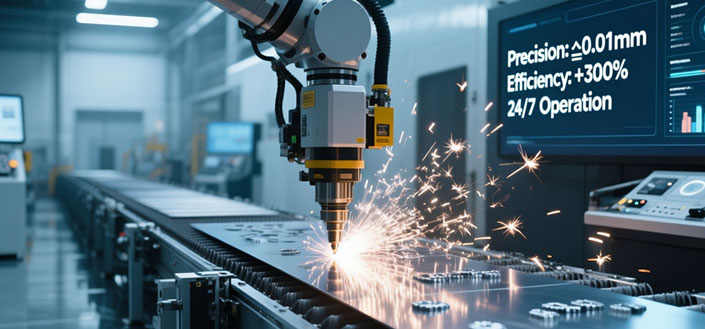
Bottleneck mapping is the measurement of each step that can starve, block, slow, or interrupt the laser cutting process over a representative production period. It converts opinions such as “loading is slow” into timed evidence that can support layout and investment decisions.
Measure at least two to four weeks across normal shifts and product families. For each order, record material-request time, pallet-arrival time, loading start and finish, program confirmation, cutting start and finish, unloading duration, part-clearing duration, remnant handling, nozzle or optics work, cleaning, alarm time, quality holds, and queue changes. Separate planned activity from unplanned loss. A scheduled lens inspection is different from waiting for a forklift.
Create a loss Pareto. Typical categories include no material, wrong material, pallet inaccessible, sheet separation failure, crane or forklift wait, program not ready, nesting revision, nozzle or optics issue, piercing instability, machine alarm, unloading table blocked, parts not cleared, skeleton disposal, sorting delay, quality inspection, and operator unavailable. The project concept should attack the largest recurring losses, not the most visible individual incident.
Also measure variability. An average loading time of three minutes may hide a process that usually takes one minute but occasionally takes twenty. Automation value often comes from reducing variation because predictable cycles make night production and centralized scheduling possible. The supplier should model both normal and credible worst-case conditions.
Observe whether the constraint moves. After automatic loading is installed, the unloading table may become the new limit. After sorting is improved, material preparation may become visible. A phased improvement program should expect this movement. The investment goal is not to eliminate every delay at once; it is to move the limiting step to the most economically sensible point and keep the overall line stable.
The best laser cutting automation layout is the smallest system that meets the required product mix, sustained output, material range, unattended duration, floor-space limit, and future expansion plan. A larger system can add flexibility, but it also adds interfaces, traffic rules, maintenance points, and scheduling complexity.
| Layout | Best Application | Main Advantages | Main Risks or Limits |
|---|---|---|---|
| Standalone laser with manual handling | Prototype work, low utilization, irregular sheets, very flexible operator-led production | Lowest capital cost and maximum manual adaptability | Handling labor, inconsistent cycle, limited night operation, ergonomic exposure |
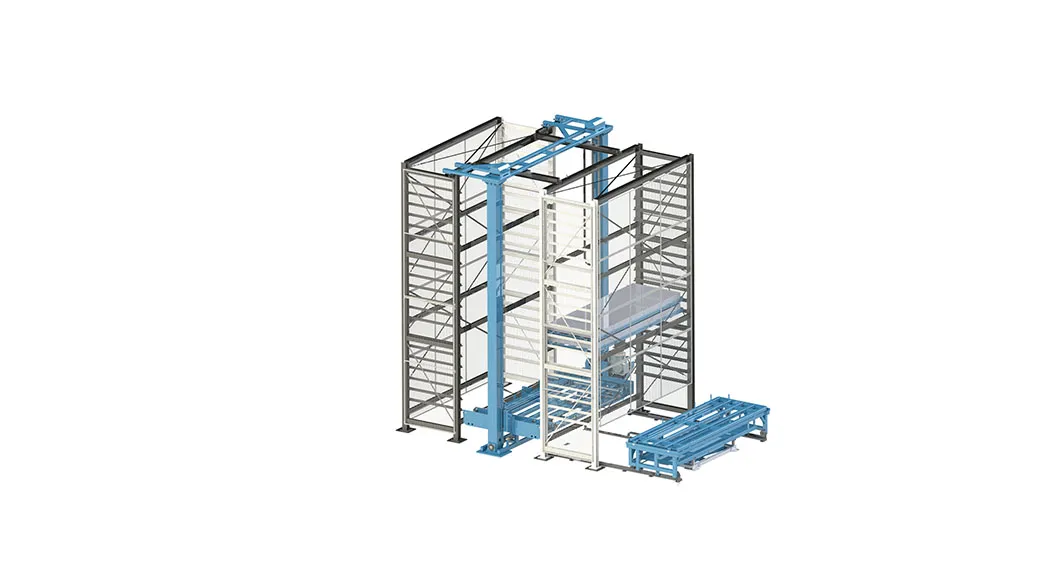
| Automatic loading and unloading cell | Retrofit of one constrained laser with nearby pallet staging | Focused scope, faster implementation, reduces repetitive handling | Still depends on pallet preparation and may not solve material-search delays |
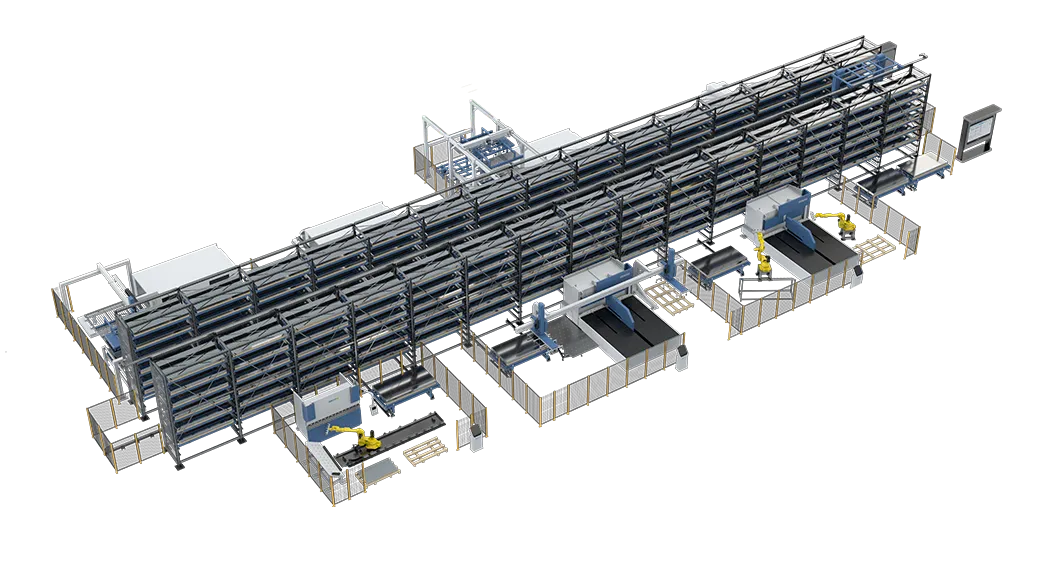
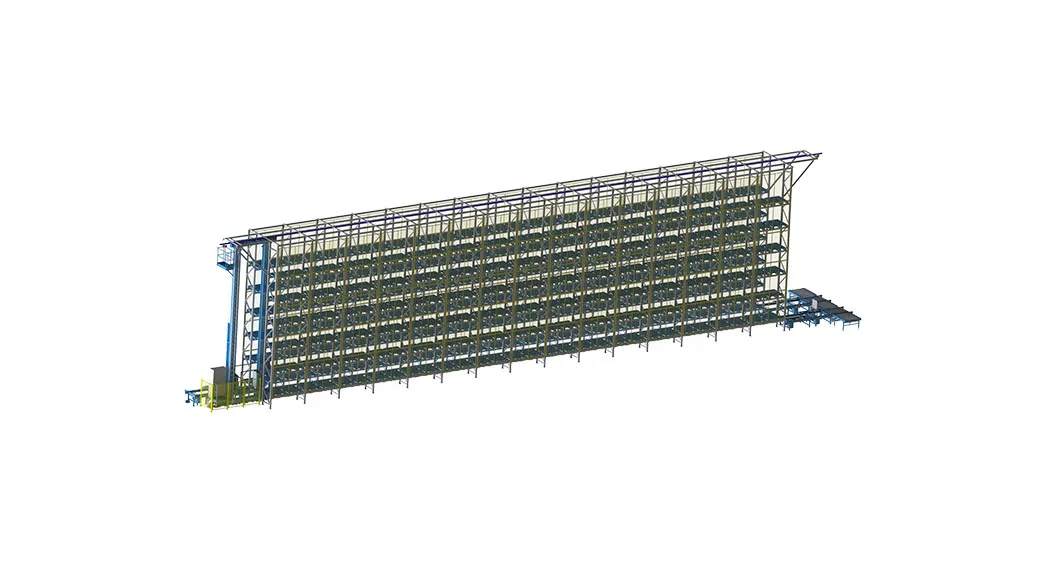
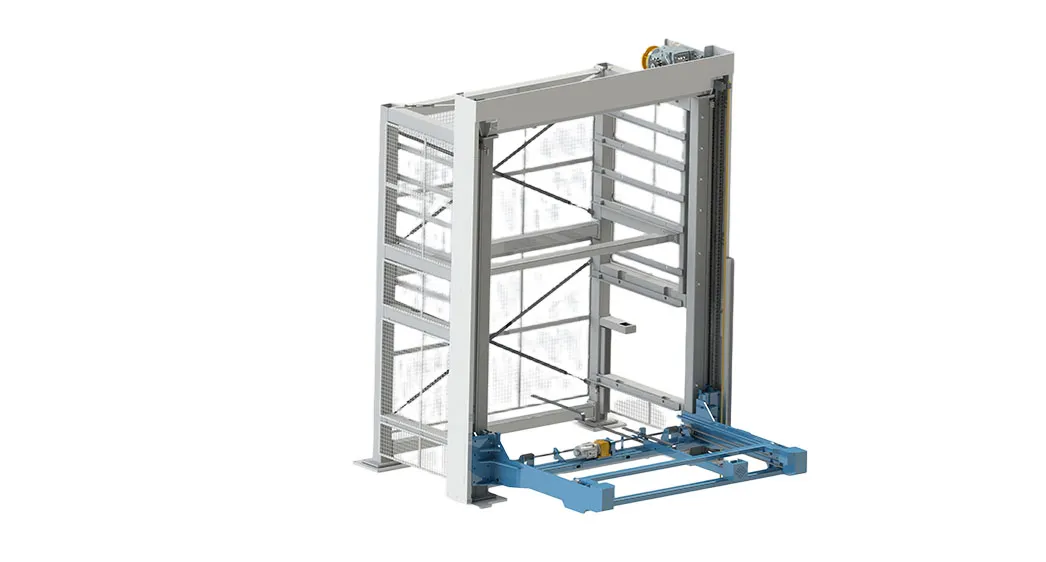
| One laser with dedicated tower storage | Mixed materials, repeatable scheduling, unattended shifts, limited floor space | Automatic retrieval, buffer capacity, traceability, compact vertical storage | Storage becomes a critical asset; slotting and remnant rules must be controlled |
| Shared storage serving two lasers | Higher volume, multiple machines, centralized scheduling | Better storage utilization and coordinated material supply | One shared device can affect both machines; dispatch logic and buffers are essential |
| Integrated FMS with sorting and downstream routing | Large order volume, high-mix production, connected bending or warehouse processes | End-to-end material flow, kitting, data visibility, scalable production | Highest engineering, software, training, and change-management demand |
A one-to-two configuration is not automatically twice as efficient as one-to-one. The shared loader, tower, or shuttle must complete enough missions to keep both lasers supplied under the actual mix of cycle times. Thin-sheet nests may finish faster than the storage system can replenish them. Thick-sheet cutting may create enough time for shared handling. Simulation should use representative job distributions rather than one average cycle.
Buffer design is equally important. Raw sheet buffers protect the laser from storage delays. Finished-sheet buffers allow cutting to continue when sorting is temporarily slower. Excessive buffering, however, consumes floor space and can hide schedule or quality problems. Define the maximum queue at each point and the rule used when the buffer is full.
Retrofit layout requires a detailed site survey. Columns, crane rails, pits, foundations, doors, fire exits, manual forklift routes, utilities, and maintenance clearances can eliminate an apparently attractive concept. The survey should also verify how equipment enters the building and whether the installation can be completed without an unacceptable production shutdown.
Automated laser cutting capacity is calculated from the sustained system cycle, available scheduled time, expected availability, product mix, and the capacity of supporting steps such as loading, unloading, and sorting. Nominal machine cycles should be adjusted with measured loss factors.
Begin with the product mix. Group orders by material, thickness, sheet size, cutting time, part density, unloading difficulty, and sorting requirement. Averages alone are dangerous because a line may alternate between fast thin-sheet nests and slow thick-plate nests. Use a weighted distribution or simulate an actual week of orders.
For each group, define the cutting cycle, handling cycle, and overlap. If cutting takes twelve minutes, unloading and loading require six minutes, and these activities can occur on an exchange table during cutting, handling may not constrain the cycle. If part clearing takes fifteen minutes and blocks the only output position, the system cycle becomes longer. Map the sequence as a network rather than adding every task mechanically.
Then apply availability. If the line is scheduled for 4,000 hours per year and expected technical and operational availability is 85%, the available running time is 3,400 hours. If the weighted system cycle is fifteen minutes per sheet, the theoretical processed quantity is 13,600 sheets. Quality losses, material shortages, and schedule inefficiencies must be applied separately. This example illustrates the method; actual availability and cycle assumptions must come from a validated study.
Capacity should also be expressed in sellable terms: finished parts, orders, kilograms, or contribution margin. Sheets per year can be misleading when sheet utilization and part complexity vary. Link the model to the current order book and forecast so the factory can see whether additional capacity removes overtime, shortens lead time, supports growth, or simply creates more idle capability.
Peak capacity matters for storage and sorting. A line may meet average demand but fail during clusters of short nests. Use an hourly mission profile for the tower and loader. Use parts per sheet and handling difficulty for the sorting station. Check the number of pallet positions required when several jobs finish before downstream processes can accept them.
Laser cutting automation ROI compares the total installed investment with the realizable annual value of recovered machine time, avoided handling labor, reduced overtime, lower damage, better material use, and additional sellable output, minus recurring costs. The model should distinguish cash savings from operational benefits.
Build the baseline first. Suppose a laser is scheduled for 4,000 hours annually but loses 700 hours to material waiting, loading, unloading congestion, and operator availability. If automation is expected to recover 65% of those losses, the recovered time is 455 hours. If the laser is the true constraint and the contribution margin is $140 per productive hour, the capacity value is $63,700. If demand does not exist, the same hours should not be valued at full contribution margin; use avoided overtime, subcontracting, or deferred machine purchase instead.
Add realizable labor effects. An automated line may reduce direct handling from two people to periodic supervision, but those employees may be reassigned. Count a cash benefit only when overtime, temporary labor, or a planned hire is reduced. Reassignment can still create value if it increases output in another constrained process, but the model should state that logic.
Add quality and material effects based on records. These can include fewer scratched sheets, fewer wrong-material runs, less forklift damage, more consistent remnant identification, improved nest release, and fewer lost parts. Avoid generic percentage claims. Use the factory’s annual cost of each documented problem and a conservative reduction assumption.
Total installed cost should include storage, loader, unloader, sorting, machine interface, guarding, controls, software, utilities, floor and foundation work, freight, installation, training, acceptance material, internal labor, and production interruption. Recurring cost includes maintenance, spare parts, energy, support, software, inspections, cleaning, and added technical staffing if required.
Evaluate at least three scenarios:
Conservative: lower recovery, no revenue growth, only avoided overtime and documented quality savings.
Expected: measured recovery, confirmed order demand, realistic labor and maintenance effects.
Upside: night production, new customers, improved lead time, and broader line integration.
A decision should remain acceptable in the conservative or expected case. If the project only works when every technical and market assumption is optimistic, the scope or timing should be reconsidered.
Cash flow timing matters. Installation may require a planned shutdown and a ramp-up period during which output falls before it improves. Include commissioning scrap, operator learning, software corrections, and the time needed to qualify product families. A payback calculation that assumes full benefit on the first day will overstate first-year return.
Storage, loading, and unloading determine whether the laser receives the correct sheet on time and whether completed work can leave the machine without blocking the next cycle. Their reliability is often more important than their maximum advertised speed.
Storage design begins with inventory behavior. List the number of active materials, grades, thicknesses, sheet sizes, pallets, average days of stock, maximum pallet weight, incoming packaging, remnant policy, and seasonal peaks. An automated sheet metal storage system with vertical towers can save floor space, but the slot count must reflect the number of distinct pallets, not only total tonnage. If ten grades share one thickness, they still require separate identification and possibly separate locations.
Automatic loading should verify sheet pickup and material identity. Vacuum zoning, cup layout, separation methods, thickness detection, and contact materials should match the sheet range. Aluminum and stainless steel require different separation considerations from carbon steel. Protective films and textured surfaces can affect vacuum. The acceptance test should include difficult but normal materials.
Unloading is not a single task. The system may move a complete sheet to a pallet, stack skeletons, separate selected parts, or create kits. Part stability depends on tabs, micro-joints, cut sequence, heat distortion, and nest density. Discuss how small parts, tipped parts, long narrow parts, and fragile geometries are handled. Sorting capacity should be modeled from the part count and handling difficulty, not only from the sheet cycle.
Maintenance access should not be sacrificed for compactness. Suction cups, filters, sensors, chains, guides, lift devices, and transfer tables require inspection and replacement. The supplier should show how technicians reach each component, where a suspended load is mechanically secured, and how a pallet can be recovered if normal motion is unavailable.
Nesting, remnant control, and scheduling improve laser cutting automation ROI by increasing material yield, reducing unnecessary pallet movements, and sequencing orders so the line spends less time changing material or waiting for prerequisites. Mechanical automation cannot compensate for poor digital preparation.
The nesting process should produce a controlled program version linked to the work order and material request. If a nest changes after material has been delivered, the system needs a method to cancel or redirect the pallet mission. Program approval should prevent an operator from running an old revision. Toolpaths should consider part stability and unloading, not only material utilization.
Remnants require identity, dimensions, material, thickness, location, and usability rules. Returning every small remnant can overload storage and create excessive handling. Discarding every remnant can waste valuable material. Define minimum dimensions by material value and future demand. Use a consistent label and require the digital record to be updated at the same time as the physical movement.
Scheduling should group jobs where practical without ignoring due dates. Material-family sequencing can reduce pallet retrieval and cleaning. Thickness grouping can reduce nozzle or process changes. Kit-based scheduling can keep parts for the same downstream assembly together. The scheduling objective should be explicit: maximize throughput, protect due dates, minimize changeover, or balance several priorities.
Night schedules require stricter readiness checks. Before an unattended queue is released, confirm material availability, program approval, nozzle and gas readiness, output capacity, fire and extraction status, and remote alarm responsibility. A long queue is not useful when the third job lacks a verified pallet and stops the line for the rest of the night.
Laser cutting automation connects to downstream processes by using part identity, order grouping, buffers, and material-handling rules to deliver the right parts in the sequence that bending or welding can consume. Integration should prevent cutting from flooding slower processes.
When the next step is automated sheet metal bending, nests can be designed around bend-cell capacity, tool availability, and kit sequence. Parts may need labels, laser marking, or digital identity so the bending program and orientation are clear. The buffer should protect both processes without allowing uncontrolled work-in-process.
When the next step uses automated welding systems, part kits, fixture availability, and production sequence matter. Cutting ten days of welding parts early may improve laser utilization while increasing inventory and hiding missing components. A connected schedule should release work according to downstream demand and exception capacity.
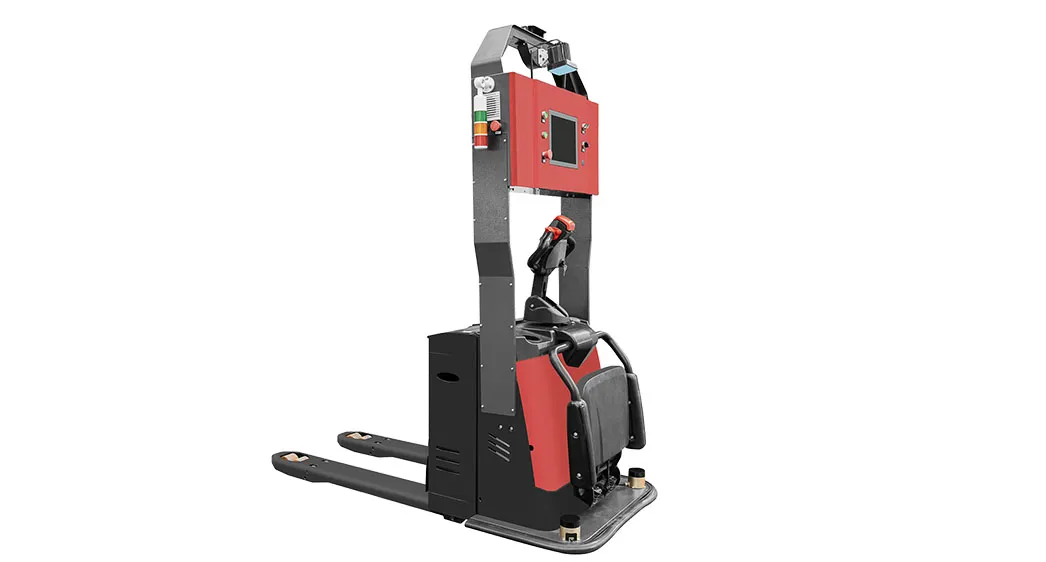
Physical transfer can use pallets, carts, conveyors, AGVs, or manual tugger routes. The right method depends on part size, kit density, travel distance, traffic, and required traceability. The data record should travel with the material through labels, pallet IDs, or system-managed missions.
Line balancing may justify a controlled decoupling buffer. The laser can continue through short downstream interruptions, while bending or welding receives kits in the correct order. The buffer size should be based on expected recovery time and schedule variability. Oversized buffers consume space and encourage overproduction; undersized buffers cause unnecessary blocking.
Laser cutting quality and traceability controls should verify that the correct material and program are used, monitor critical process conditions, record nonconformities, and preserve order-level production history. Automated movement without verification can repeat an error across a larger batch.
Minimum controls often include material and thickness confirmation, program version, nozzle and process recipe status, gas availability, focus or optics checks where supported, alarm history, completed quantity, and operator or shift identification. Inspection frequency should follow part risk. Critical dimensions may require first-piece inspection, periodic sampling, or automated measurement.
Traceability can link each order to material lot, nest, machine, start and finish time, alarms, inspection result, and destination pallet. The required depth depends on the industry. Electrical cabinets may need different records from medical or transportation components. Define retention period and access permissions before commissioning.
NIST notes that smart manufacturing data analytics should turn process data into actionable knowledge. The practical implication is to avoid collecting fields that no one reviews. Start with a downtime Pareto, schedule adherence, quality loss, material yield, and constraint utilization. Add analytics only when the basic data are accurate and operating teams use the result.
Quality controls should include a reaction plan. If the first piece fails, the system must hold the order and prevent automatic continuation. If a process alarm suggests deteriorating cut quality, the line should identify affected sheets and require inspection. Traceability is useful only when it helps contain risk and guide corrective action.
Laser cutting automation safety requires control of laser radiation, machine motion, material handling, fire risk, fumes, stored energy, maintenance access, and restart behavior through a documented risk-reduction process. OSHA notes that laser exposure can damage eyes and skin, and industrial systems may involve additional mechanical and process hazards.
The final machine classification, enclosure, interlocks, extraction, fire detection or suppression strategy, gas system, electrical design, and access control depend on the configuration and destination market. ISO 12100 provides a general risk-assessment methodology. Applicable laser-processing standards and local requirements should be identified by the supplier and the customer’s safety team.
Automation adds moving loaders, shuttles, towers, exchange tables, and sorting devices. The safeguarded area must include all hazardous movement, not only the laser enclosure. Safe modes are needed for setup, cleaning, nozzle work, pallet recovery, and maintenance. A reset button should be located where the operator can verify the zone rather than reset from a blind position.
Factory acceptance and site acceptance should test normal production and faults: guard opening, emergency stops, loss of vacuum, blocked travel, pallet misalignment, network loss, power recovery, fire alarm interface where applicable, and restart prevention. The training plan should cover operators, maintenance, programmers, supervisors, and emergency response personnel.
Unattended operation requires explicit rules. Define who receives alarms, how quickly a qualified person can respond, which faults stop the complete line, and which systems remain active after a stop. Extraction, gas, cooling, and fire protection must behave safely during power or network loss. The risk assessment should not assume that an operator is always standing beside the machine.
A laser cutting automation RFQ should describe the product mix, materials, equipment interfaces, performance targets, layout, software connections, safety basis, acceptance tests, support expectations, and future expansion. A detailed RFQ produces more comparable quotations and fewer change orders.
Existing or planned laser model, table size, control version, power, and exchange-table details.
Sheet dimensions, pallet weight, grades, thickness distribution, coatings, films, surface requirements, and incoming packaging.
Representative nests, cutting-time distribution, average and peak daily orders, batch sizes, shifts, and target unattended duration.
Storage slot count, inventory policy, remnant rules, loading and unloading method, sorting scope, and downstream destinations.
Layout drawing with columns, doors, cranes, pits, aisles, utilities, fire exits, and future equipment.
Required MES, ERP, WMS, nesting, barcode, or machine-data interfaces and responsibility for each connection.
Applicable safety and electrical requirements, guarding preference, risk assessment, validation, and documentation.
Required sustained output, availability definition, quality criteria, changeover assumptions, failure recovery, and acceptance duration.
Training languages, spare parts, remote support, on-site response, warranty, preventive maintenance, and software update policy.
Ask suppliers to state exclusions and assumptions beside every performance figure. For example, a cycle may assume pre-staged pallets, perfect separation, one material, no sorting, and no operator intervention. These assumptions are not necessarily unreasonable, but they must match the expected operation.
Include the commercial measurement method. If the target is 90% availability, define scheduled time, excluded causes, planned maintenance, changeover, material shortage, customer delay, and the minimum test period. If the target is parts per hour, define the representative nest and quality acceptance. Precise definitions reduce disagreement during commissioning.
Toyuris designs laser cutting automation by combining laser machines with modular loading, unloading, storage, sorting, controls, and production-management interfaces for continuous sheet metal processing. Published Toyuris configurations include one-to-one and shared storage concepts as well as loading, unloading, and sorting automation.
The company describes its laser automation as suitable for high-mix and batch production, with fast material changeover, modular layouts, and connection to upper-level software. For a project-specific concept, Toyuris engineers need actual order and material data. The engineering discussion should determine whether the factory’s priority is labor reduction, night production, space utilization, faster response, centralized scheduling, traceability, or a combination.
A phased project can begin with automatic loading and unloading and reserve interfaces for storage, sorting, or MES. A more integrated project can coordinate several machines and connect to bending, welding, and warehouse logistics. In both cases, the technical agreement should define sustained performance, scope boundaries, site responsibilities, safety standards, and acceptance methods.
The initial feasibility package should include a layout, process flow, capacity assumptions, interface list, safety concept, utilities, preliminary schedule, scope matrix, and data required for detailed engineering. Buyers should review this package with production, maintenance, safety, IT, quality, and finance so that the investment reflects the whole factory rather than one department’s goal.
Laser cutting automation creates the strongest return when it is designed around the factory’s true constraint and measured as a complete material-to-part system. The business result depends on how quickly and reliably the correct material reaches the laser, how completed work leaves the machine, how parts are sorted and identified, and how the schedule responds to real conditions.
Measure current losses, model representative orders, compare the smallest suitable layouts, and calculate conservative ROI. Specify storage, loading, unloading, sorting, data, safety, and recovery with the same discipline used for the laser itself. When these elements are aligned, automation can recover productive hours, stabilize output, improve material control, and create a scalable path toward connected sheet metal production.
These questions summarize the most common technical and commercial issues buyers should resolve before approving an automated laser cutting line.
The main benefit is higher sustained utilization of the laser by reducing waiting, handling, and schedule variation around the machine. Additional benefits can include safer sheet movement, night production, material traceability, lower damage, and more predictable delivery, depending on the selected scope.
Often yes, but feasibility depends on table geometry, control signals, available space, sheet range, safety system, foundation, and the machine manufacturer’s interface. A site and technical review should confirm the exact modifications before a final quotation.
No. A compact loader can work with staged pallets. Tower storage is valuable when the factory has many materials, limited floor space, frequent retrieval, night production, or a need for centralized inventory. The correct slot count should reflect distinct pallets and remnants, not only total tonnage.
Calculate recovered productive hours, realizable labor or overtime savings, quality and material savings, and additional contribution from sellable capacity. Subtract maintenance and other recurring costs, then divide the total installed project cost by the net annual benefit for simple payback.
Provide representative nests, cutting-time distribution, material and thickness mix, batch sizes, daily order count, shift schedule, loading and unloading times, downtime reasons, sorting requirements, and downstream capacity. Averages should be supplemented with actual order distributions.
It can support unattended periods when material supply, separation, machine condition, unloading capacity, fire and fume controls, alarm handling, remote notification, and risk assessment are designed for that mode. The permitted duration and supervision method should be defined in the project requirements.
The following primary and standards-based sources provide further information on laser hazards, smart-manufacturing analytics, and machinery risk reduction.