What are you looking for?
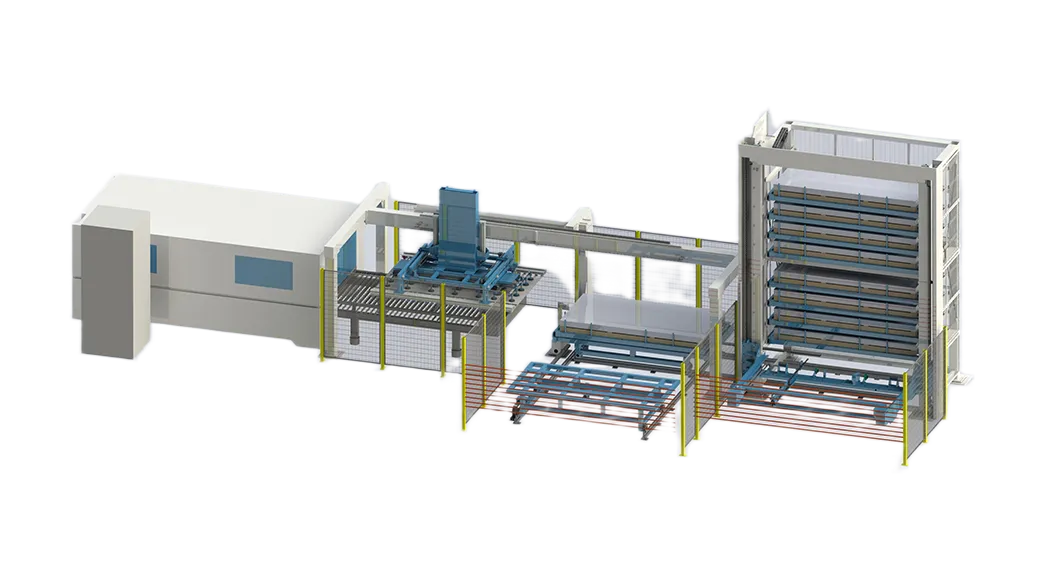
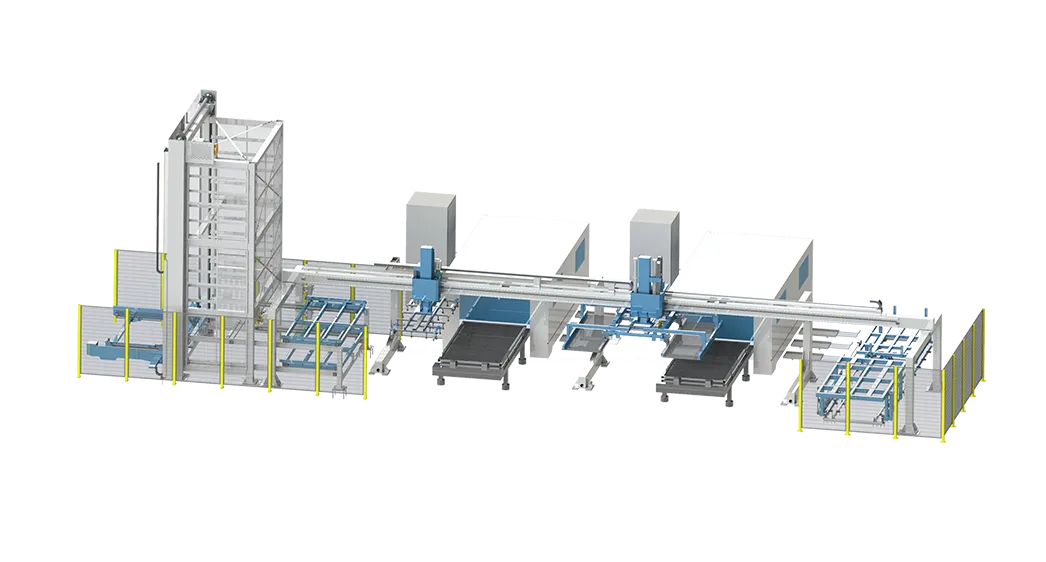
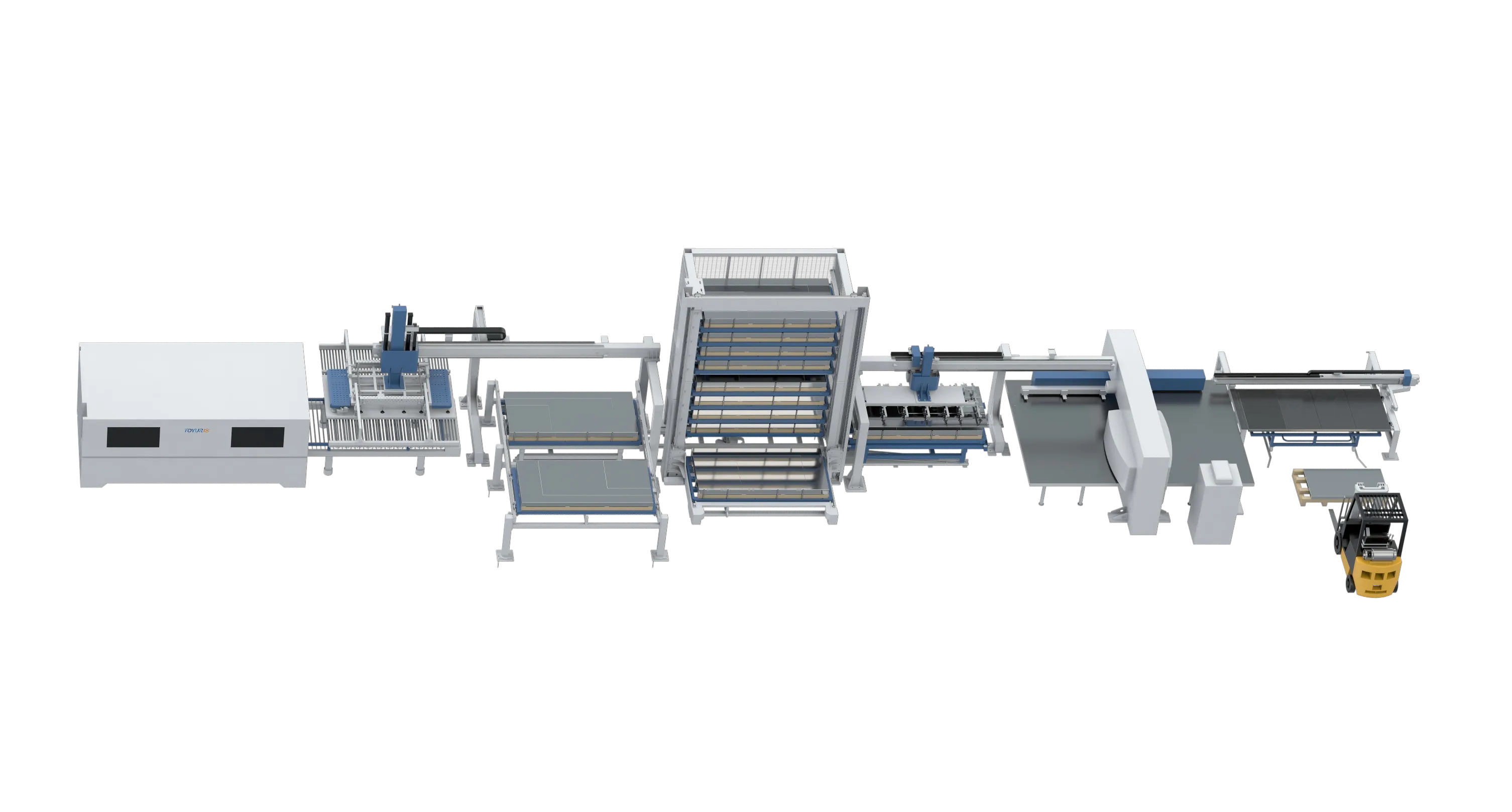
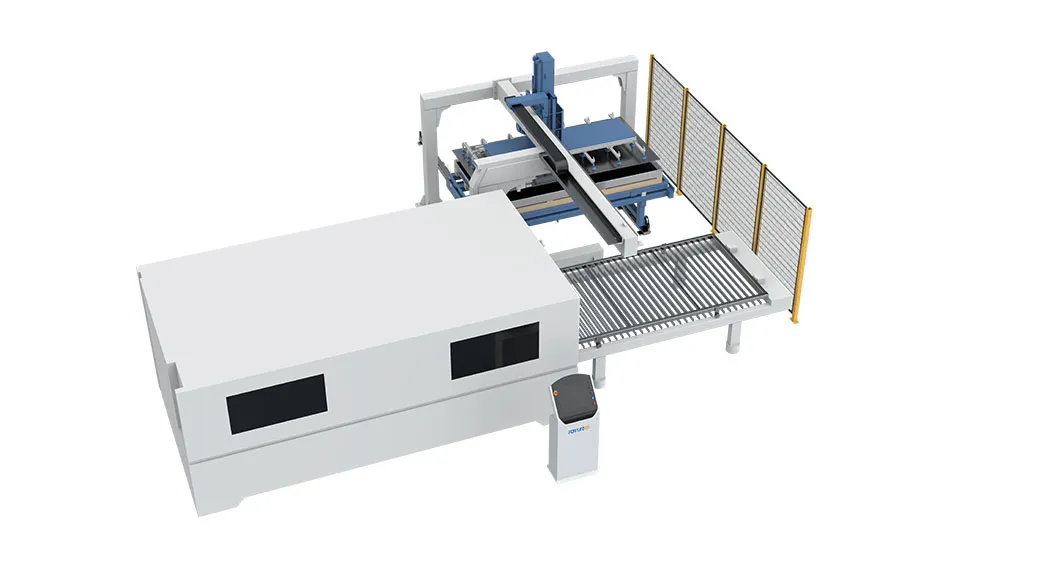
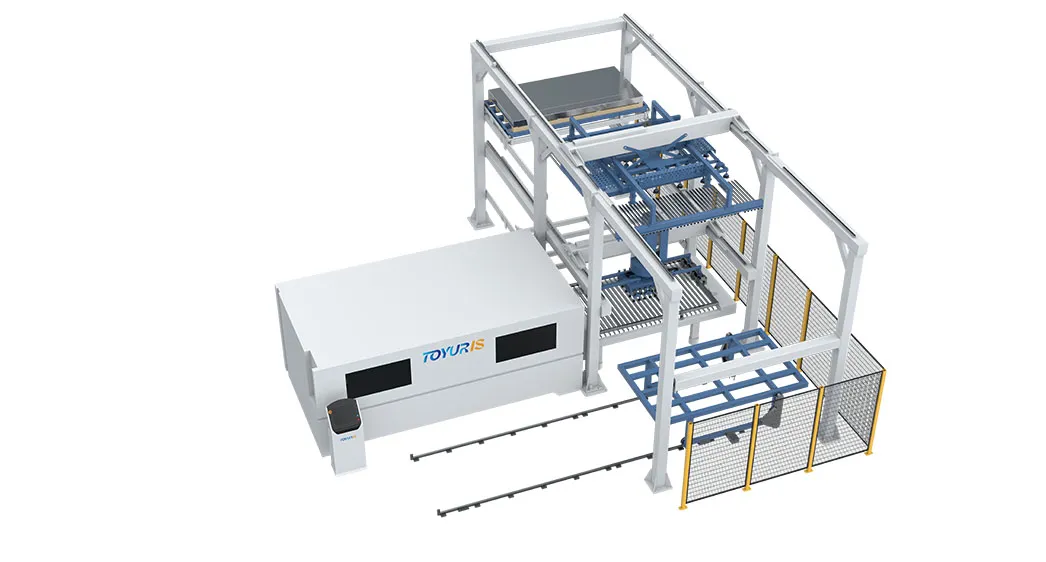
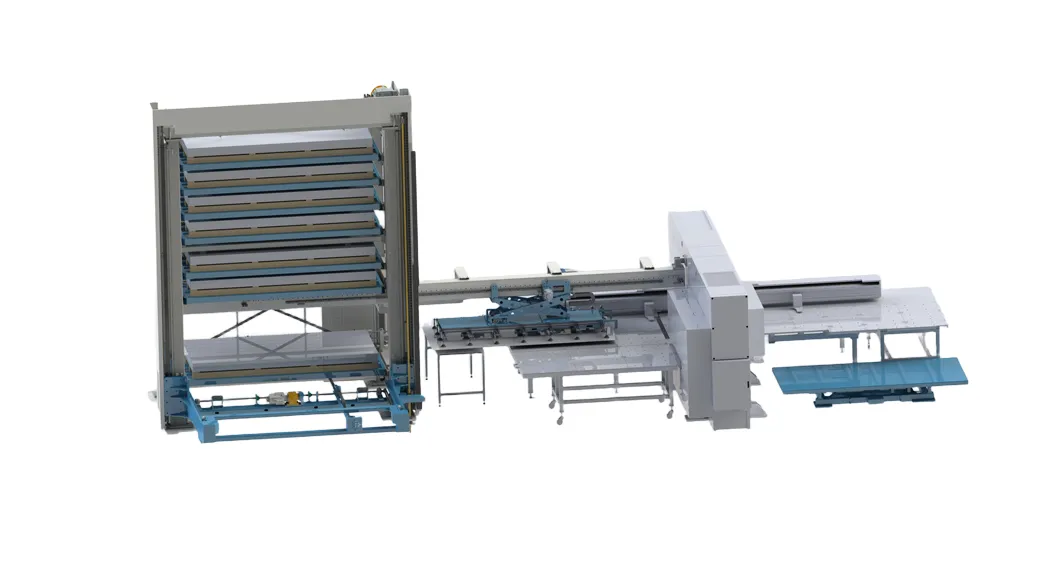
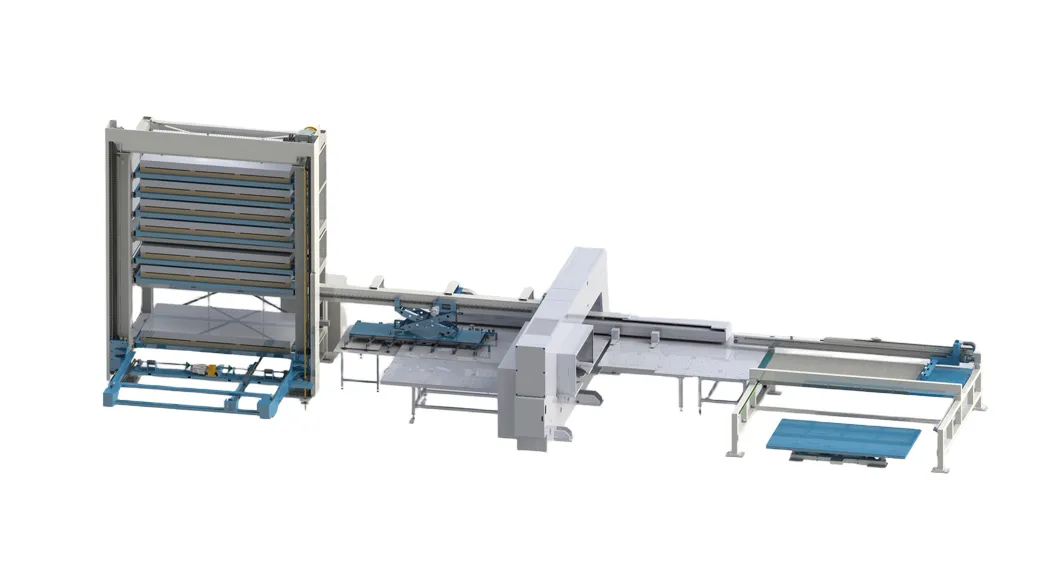
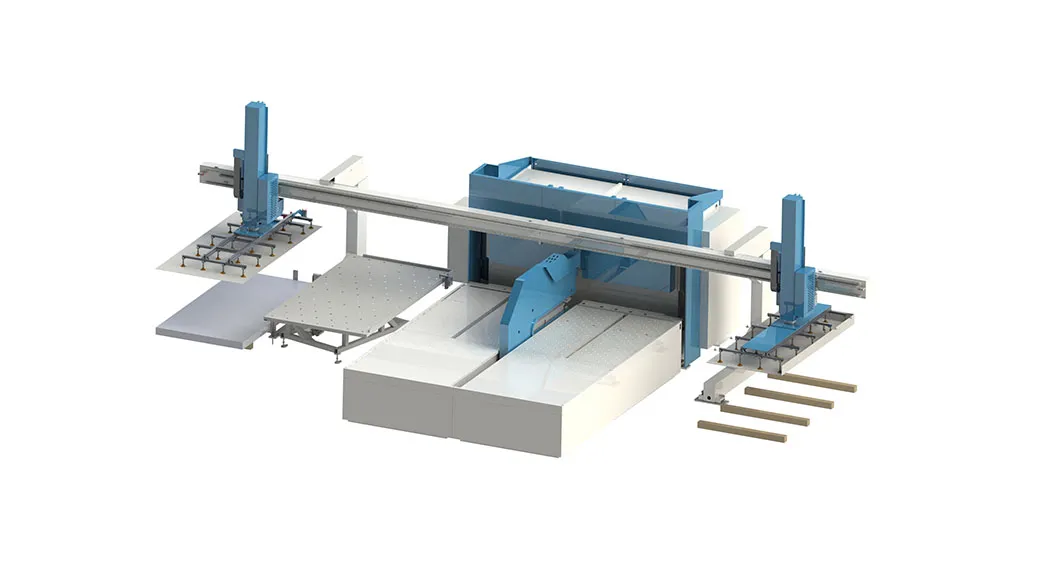
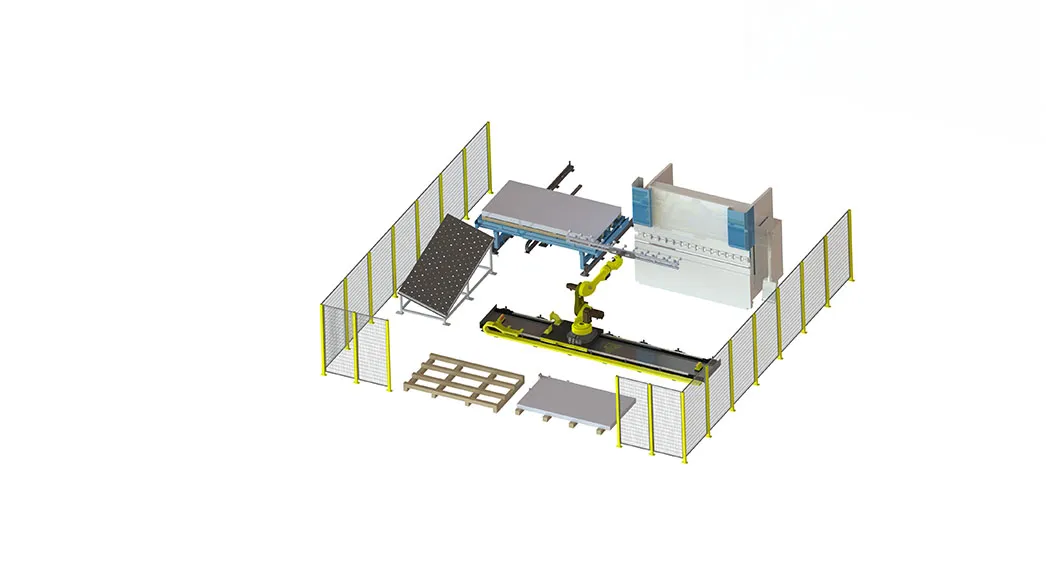
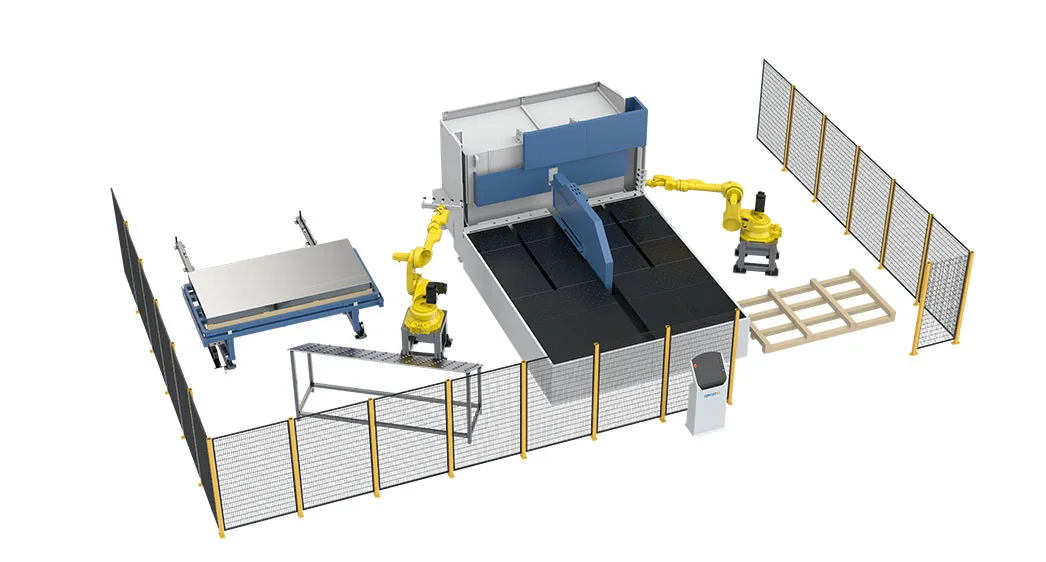
Punch press automation connects material storage, sheet separation, robotic loading, CNC punching, unloading, sorting, and production data into one controlled workflow. It is most valuable when a sheet metal factory loses productive hours to manual handling, night-shift staffing, inconsistent loading, frequent order changes, or poor visibility into machine status. A successful project is not defined by the robot alone. It depends on reliable material identification, verified sheet pickup, stable interfaces with the punch press, safe guarding, realistic buffers, maintainable controls, and a production-management method that matches the factory’s order mix.
For many factories, the first automation question sounds simple: “Can a robot load and unload our punch press?” The better question is broader: “Can the entire punching process release orders, deliver the right sheet, run safely, recover from normal interruptions, and report usable production data without creating a new bottleneck?” This guide explains the engineering and commercial decisions behind that question. It is written for factory owners, production managers, process engineers, automation teams, and procurement specialists who need to compare solutions rather than collect generic product claims.
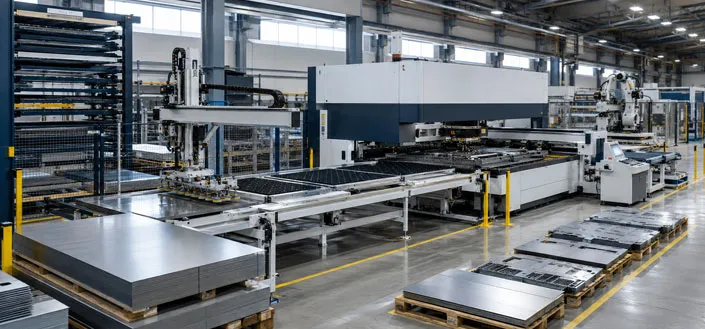
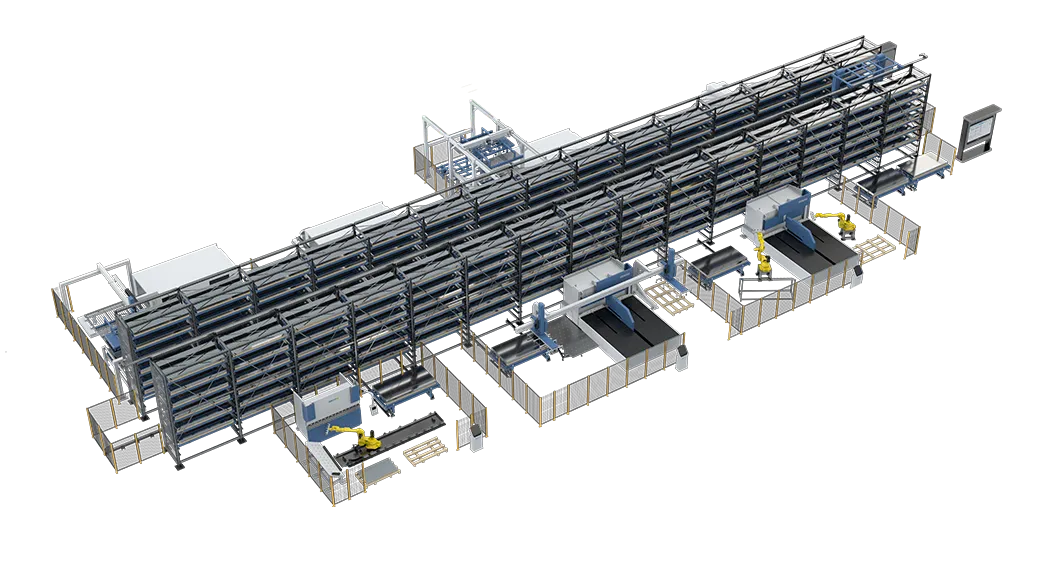
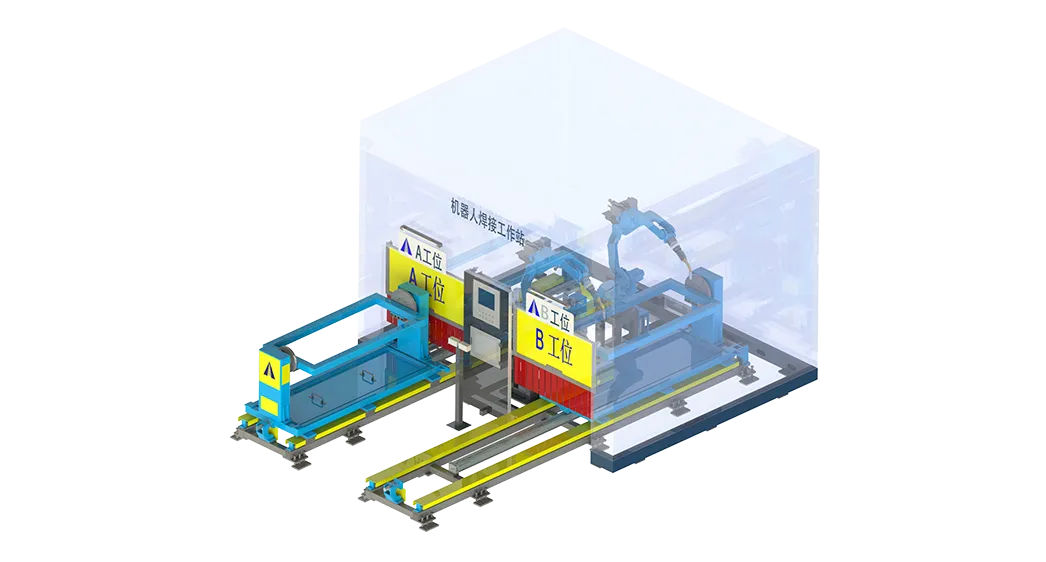
Punch press automation is a coordinated production system that automatically moves, verifies, processes, and tracks sheet metal before, during, and after CNC punching. The system may be a compact loading-and-unloading unit connected to one machine, or a broader line connected to storage, multiple punch presses, bending equipment, AGVs, and MES software. The automation level should be selected from the process requirement, not from the desire to maximize the number of robots.
A conventional punch press can be highly productive while the ram is moving, yet still lose a large share of the available shift to sheet retrieval, forklift waiting, manual alignment, operator breaks, unloading, sorting, die preparation, and order clarification. Automation targets these losses. It creates repeatable interfaces between people, materials, machines, and production information. The result can be longer unattended runs and more stable output, but only when the upstream and downstream steps are designed as carefully as the punching cycle.
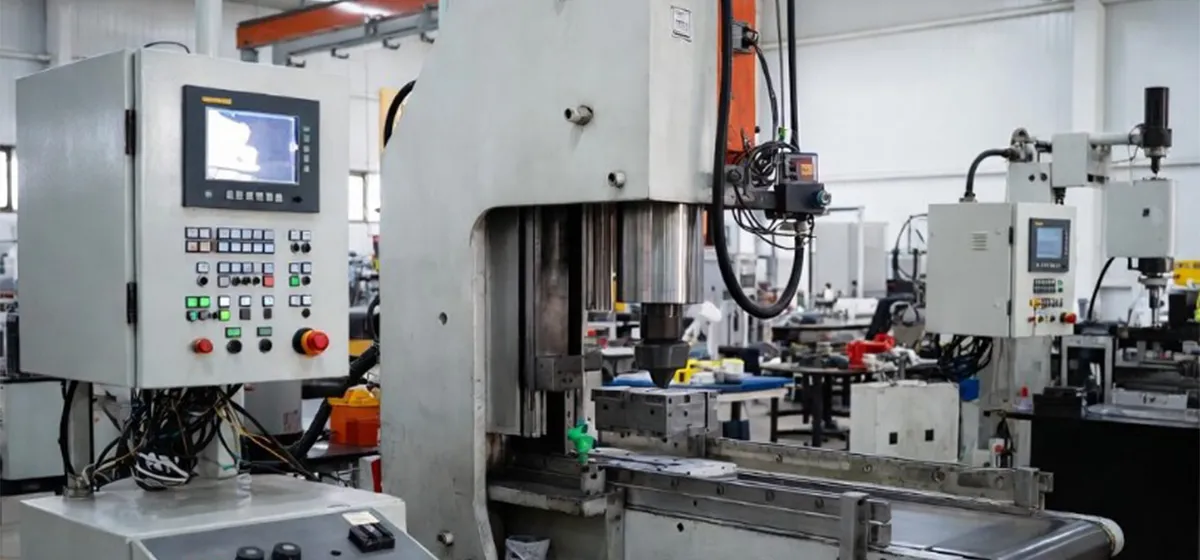
The term also covers different equipment families. A servo turret punch, mechanical power press, hydraulic press, or combined punch-laser machine has different loading geometry, safeguarding requirements, tooling behavior, scrap flow, and recovery procedures. Buyers should therefore avoid using “automatic punch press” as a single technical specification. The request for quotation should state the existing or planned machine model, sheet dimensions, material range, thickness range, surface requirements, part mix, daily order profile, tooling method, output method, and the expected connection to production software.
Toyuris develops punch press for sheet metal production, including automated loading, punching, unloading, storage integration, and production-data connectivity. The commercial value comes from how these elements work as a line rather than from any individual component.
Punch press automation converts a digital work order into a verified sequence of material retrieval, loading, punching, unloading, sorting, and production confirmation. The exact sequence changes by layout, but a robust line normally follows a controlled state model so that each step confirms completion before the next movement begins.
The process starts before a sheet moves. The system receives or imports a job containing the part program, material grade, sheet size, thickness, quantity, priority, due date, and tooling requirements. In a basic cell, an operator selects the program at the HMI. In a connected factory, the order may be released from MES and checked against inventory data. The important control is version consistency: the punching program, nesting plan, tooling setup, and material request must refer to the same approved order revision.
Good automation does not eliminate production planning. It makes weak planning visible. If work orders lack accurate material data or if priorities change continuously without rules, the automated cell will stop, wait, or process the wrong sequence more efficiently. Before implementation, the factory should define who can release an order, who can change priority, how urgent jobs enter the queue, and how incomplete orders are blocked.
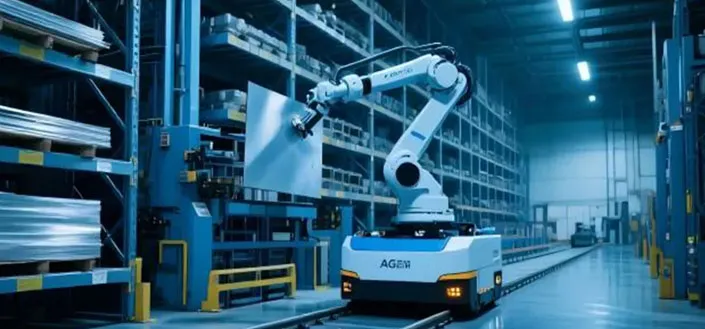
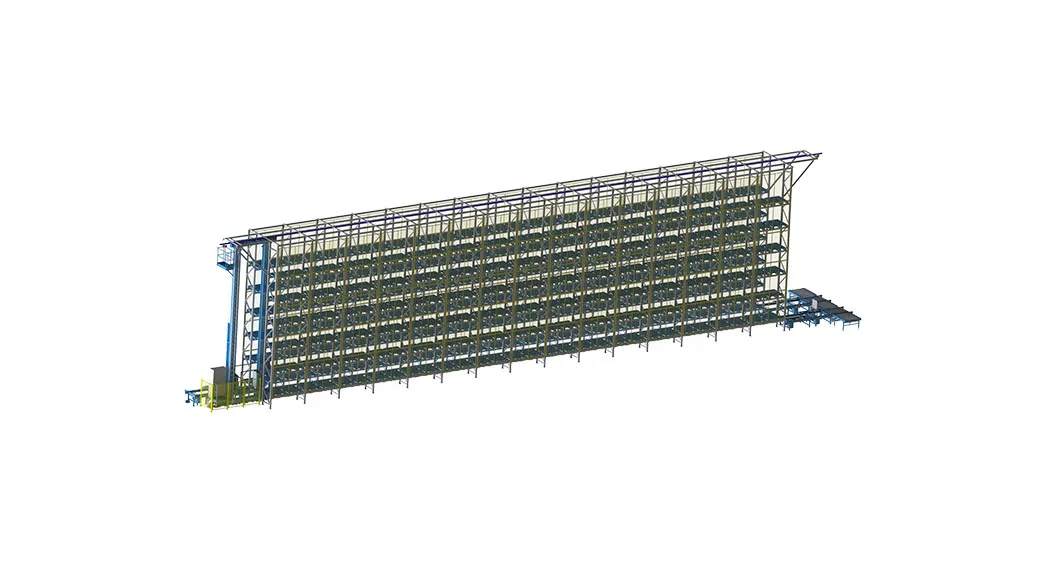
Raw material may come from a nearby pallet station or an automated warehouse system. The storage controller identifies the required pallet and presents it to the loading position. The cell should verify material identity through a pallet ID, barcode, RFID record, operator confirmation, or a combination of methods. Thickness measurement is valuable because it checks the physical sheet against the digital instruction. It should not be treated as the only material-identification method because two grades can share the same thickness.
Sheet separation is a critical reliability step. Oiled, thin, or flat sheets can stick together. Typical solutions combine magnetic separation for ferromagnetic materials, air knives, peeling motions, mechanical fanning, vacuum zoning, and thickness detection. The correct method depends on steel grade, aluminum use, protective film, surface finish, sheet flatness, and environmental conditions. The supplier should demonstrate the separation method with representative customer material, not only clean showroom sheets.
The loading device moves the sheet into the punch press and completes a handshake with the machine control. The system must know that the worktable is ready, clamps or grippers are in the correct state, the program is loaded, the safety zone is clear, and no unresolved alarm is present. Positioning may use mechanical stops, press clamps, servo axes, edge sensing, or vision. Toyuris states that certain configurations can achieve positioning accuracy up to ±0.1 mm; the project acceptance document should define where that accuracy is measured, under which sheet conditions, and how it is verified.
Surface protection deserves explicit attention. Stainless steel, pre-painted material, galvanized sheet, and visible enclosure panels can be damaged by sliding, dirty suction cups, chips, or worn contact strips. The design should identify all contact points, cleaning intervals, permissible marks, and the method for detecting trapped scrap. A fast loader that scratches sellable parts is not a productivity improvement.
During punching, the automation controller and machine control exchange status signals. The cell should distinguish normal waiting from faults: tool change, program completion, clamp repositioning, scrap chute full, sheet movement abnormal, machine alarm, guard open, or emergency stop. Operators need clear messages that identify the failed step and the safe recovery action. An alarm code that only says “sequence error” turns a short interruption into a long troubleshooting event.
Recovery design is one of the strongest indicators of system maturity. Buyers should ask what happens after power loss, vacuum loss, a double-sheet alarm, a partially loaded sheet, a press fault, an interrupted unloading cycle, or a network interruption. The system should preserve enough state information to recover safely without guessing. Manual jog functions should be permission-controlled, clearly labeled, and protected by safe operating modes.
After punching, the system may pull the skeleton sheet, transfer the complete processed sheet, allow small parts to fall into bins, or use a robot to sort selected parts. The unloading concept must match part retention. Micro-joints, tabs, part size, skeleton stiffness, material thickness, and nest density all affect whether parts remain stable. If operators must separate every part manually, the cell may still improve machine utilization, but the business case should count downstream labor honestly.
The final step is digital confirmation. Completed quantity, cycle time, machine alarms, material consumption, scrap status, and order completion can be returned to MES or recorded locally. The data should support decisions, not simply create a large log file. Production managers normally need a small set of consistent fields: scheduled quantity, good quantity, rejected quantity, start and finish time, planned and unplanned downtime, alarm reason, material lot, and operator or shift responsibility.

The core components of an automated punch press cell are the material source, sheet-separation device, loading mechanism, machine interface, unloading method, safeguarding system, control platform, and production-data connection. Each component must be specified as part of one operating sequence.
| Component | Main Function | Questions to Verify Before Purchase |
|---|---|---|
| Material storage or staging | Presents the correct pallet or sheet stack | How are grade, thickness, location, remnants, and FIFO status identified? |
| Sheet separation | Prevents two sheets from being loaded together | Which methods are used for carbon steel, stainless steel, aluminum, oily sheet, or film-coated material? |
| Loading manipulator | Picks, transports, and positions the sheet | What are the payload, cycle time, sheet range, vacuum zoning, and safe recovery modes? |
| Punch press interface | Coordinates readiness, clamps, program, cycle, and alarms | Is the interface proven with the exact machine brand and control version? |
| Unloading and sorting | Removes processed sheets, skeletons, or individual parts | How are unstable nests, small parts, skeleton deformation, and mixed orders handled? |
| Safety system | Controls access and hazardous motion | Are risk assessment, guarding, interlocks, safe modes, and validation included? |
| PLC, HMI, and diagnostics | Runs sequences and guides recovery | Are alarm messages specific, multilingual, logged, and accessible remotely? |
| MES or data interface | Connects orders, material, status, and performance data | Which system owns the schedule, inventory record, program version, and completion status? |
A complete specification also includes utilities, foundations, floor loading, network architecture, spare parts, maintenance access, environmental limits, training, documentation, acceptance tests, and after-sales response. These items often determine project stability but receive less attention than robot reach or nominal cycle time.
The loading mechanism should be selected by required motion and sheet behavior rather than by brand familiarity. A gantry can provide rigid Cartesian motion over a defined area. An articulated robot can offer more flexible orientation and compact reach around obstacles. A dedicated loader may provide the fastest repetitive cycle. The engineering study should compare usable payload after tooling, sheet deflection, vacuum reserve, reach at every transfer point, and the effect of a failed pickup.
Controls architecture should also be explicit. The punch press retains control of its cutting process and internal safety functions, while the cell PLC coordinates material movement and line sequence. A higher-level controller may manage jobs and storage. Signal ownership, timeouts, alarm reset, maintenance modes, remote access, backup, and software-change authorization should be included in the interface document.
An automated punch press is a better investment when measurable handling losses, staffing constraints, quality variation, or scheduling requirements are large enough to justify the added equipment and integration cost. Automation is not automatically superior for every factory. A stable manual or semi-automatic process can be the right answer for low utilization, highly irregular material, frequent engineering trials, or products that require continuous operator judgment.
The strongest candidates usually have one or more of these conditions: a punch press waits for material; operators spend substantial time moving sheets; heavy or large sheets create ergonomic risk; night shifts are difficult to staff; repeated products need predictable output; the factory wants unattended production; material identity errors occur; machine utilization is limited by breaks; or growth is constrained by floor space and labor rather than by customer demand.
Factories should gather at least two to four weeks of baseline data before approving a concept. Record scheduled hours, actual punching hours, material-wait time, loading and unloading time, changeover time, alarm time, scrap events, overtime, operator count, forklift trips, and the time required to find the correct pallet. The measurement period should include normal product variety rather than a single favorable batch.
| Operating Model | Best Fit | Advantages | Limitations |
|---|---|---|---|
| Manual loading and unloading | Low utilization, prototypes, irregular sheets, low capital budget | Maximum human flexibility and low integration cost | Higher handling labor, inconsistent pace, limited unattended operation |
| Semi-automatic loading or unloading | One dominant handling bottleneck and existing machine retrofit | Lower project scope, faster implementation, retains operator control | Remaining manual step can still limit throughput |
| Fully automated single-machine cell | Repeatable order mix, night production, labor shortage, stable machine interface | Longer runs, consistent handling, traceable status | Requires reliable input data, guarding, buffers, and recovery procedures |
| Integrated line with storage and MES | Multiple machines, high order frequency, centralized scheduling, smart-factory program | Coordinated material flow, inventory visibility, scalable production | Highest integration, change-management, and data-governance demand |
A common mistake is to automate a machine that is not the real constraint. If punching already has excess capacity but bending, welding, inspection, or order release is late, higher punching output may create more work-in-process. The business case should model the entire value stream and confirm where additional output can be converted into shipped orders, reduced overtime, shorter lead time, or avoided capital expenditure elsewhere.
Another warning sign is unstable input material. If pallets arrive damaged, sheets vary beyond agreed flatness, protective films lift, or grade identification is unreliable, an automatic loader may experience repeated exceptions. In that case, receiving and storage standards should be improved before the production cell is expected to run unattended. Automation rewards consistent inputs and exposes uncontrolled variation.
Punch press automation ROI is calculated by comparing the project’s total installed cost with the annual value of labor savings, recovered machine hours, lower scrap, reduced overtime, and additional sellable capacity, minus recurring operating costs. The calculation should use measured factory data and at least three scenarios.
Start with available production time. If a factory schedules two eight-hour shifts for 250 days, the theoretical annual time is 4,000 hours. Theoretical time is not sellable capacity. Subtract planned maintenance, meetings, tool preparation, and expected changeover. Then measure the current share of time lost to material handling and waiting. If manual handling consumes 20 minutes across 18 batches per day, the annual handling time is 1,500 hours: 20 minutes × 18 batches × 250 days ÷ 60. Automation will not recover every minute, so the model might use 60%, 75%, and 85% recovery scenarios.
Next, convert recovered time into economic value. If the constraint is the punch press and customer demand exists, recovered machine hours can be valued using contribution margin per machine hour. If demand is uncertain, use a more conservative value based on avoided overtime or deferred equipment purchase. Labor savings should use fully burdened labor cost, but only count positions or overtime that can actually be removed, reassigned, or avoided. Moving an operator to another necessary task is operationally useful, yet it is not a cash saving unless the business case explains the avoided hire or added output.
An illustrative calculation might include 900 recovered productive hours, 1,000 handling labor hours reassigned from overtime, $18,000 in annual scrap and damage reduction, and $12,000 in avoided forklift and internal logistics cost. If the contribution value of recovered capacity is $90 per hour, the capacity component is $81,000. The total gross annual benefit becomes $111,000 before any separately realizable labor saving. If recurring maintenance, support, energy, and consumables equal $28,000, the remaining net benefit can be compared with the complete installed cost. This is an example framework, not a Toyuris performance promise.
Use these formulas:
Recovered hours = baseline handling and waiting hours × expected recovery percentage.
Capacity value = recovered constraint hours × contribution margin per constraint hour.
Net annual benefit = capacity value + realizable labor saving + quality saving + logistics saving − recurring cost.
Simple payback = total installed project cost ÷ net annual benefit.
Three-year ROI = (three-year cumulative net benefit − project cost) ÷ project cost.
The installed project cost should include the automation hardware, storage changes, guarding, controls, machine-interface work, foundation and utilities, software, freight, installation, training, commissioning material, production downtime during installation, and internal engineering time. A low equipment quotation can become an expensive project if these items are excluded.
Capacity calculations should also consider batch distribution. If 60% of jobs are small batches with frequent material changes, a storage and scheduling improvement may have more value than a faster gripper. If most work is a long stable run, the dominant value may come from unattended hours and consistent unloading. The supplier’s simulation should use a representative week, not only the easiest part.
Punch press automation supports high-mix, low-volume production by reducing physical changeover losses and using digital scheduling to coordinate frequent changes in material, program, tooling, and destination. It does not remove the need for disciplined master data and process planning.
High-mix factories face a different challenge from long-run mass production. The robot may be fast enough, but each order introduces a new combination of sheet grade, thickness, nest, tool set, part labeling, and downstream route. The automation system should therefore prioritize fast information changeover as much as mechanical speed. Order queues should show whether material, program, tooling, and destination are ready. Jobs with missing prerequisites should be prevented from occupying the machine.
Small batches benefit from storage integration because the correct pallet can be delivered without repeated forklift searches. They also benefit from automatic verification and predefined unloading destinations. However, too many partially used pallets can reduce storage efficiency. The factory needs a remnant policy: which remnants are returned, how they are labeled, the minimum usable dimensions, who approves reuse, and how the remaining size is represented digitally.
Flexible production also requires practical exception rules. An urgent order may interrupt the queue, but the system should show the cost of the change: extra material retrieval, tool setup, cleaning, or unfinished work-in-process. Without this visibility, “priority” can become the default status for every order and destroy the stable sequence automation needs.
Part design and nesting standards can improve automation reliability. Long narrow parts, dense small-part nests, weak skeletons, and parts with inadequate tabs may create unloading problems. The production engineering team should define which geometries can run unattended and which require operator verification. A mature factory gradually expands the unattended product library after evidence confirms stable handling.
MES should connect to punch press automation through a defined ownership model for orders, programs, material identities, machine states, quantities, and completion records. More data fields do not create better control unless each field has a reliable source and a user who acts on it.
NIST describes MES as a way to acquire real-time data and recognize defects or inefficiencies before their cost becomes embedded in the process. In practice, the connection should begin with a limited, reliable scope. MES can send an approved order and receive status, start time, completion time, good quantity, reject quantity, downtime reason, and material consumption. Inventory may remain owned by ERP or WMS, while the cell controller owns the immediate sequence and safe motion.
The interface should handle network loss. The cell may need a controlled local queue so current production can finish safely without creating duplicate completion records. Time synchronization, user permissions, program version control, and audit logs should be specified. Cybersecurity responsibilities also need to be clear when remote diagnostics, vendor access, or cloud dashboards are used.
For a broader sheet metal automation program, MES should connect punching to storage, laser cutting, bending, welding, and logistics in phases. A staged deployment is usually easier to validate than a factory-wide “big bang” that attempts to standardize every machine and data field at once.
The first dashboard should remain practical. Production teams usually need schedule adherence, completed quantity, machine availability, top downtime reasons, average recovery time, material waiting, and quality holds. When these fields are accurate and used in daily management, the factory can add energy, tool life, predictive maintenance, and advanced scheduling data. A large dashboard with unreliable records damages trust and encourages operators to bypass the system.
Punch press automation safety requires a documented risk assessment, engineered safeguarding, safe control functions, validated interlocks, controlled operating modes, and procedures for setup, maintenance, and fault recovery. Removing the operator from routine loading does not remove hazardous energy or access needs.
OSHA 29 CFR 1910.217 addresses mechanical power presses, while other machine types and press brakes may fall under different requirements. ISO 12100 provides general principles for machinery risk assessment and risk reduction. The applicable standards depend on the machine type, destination market, final configuration, and local law. Buyers should require the supplier and local safety team to identify the compliance basis in writing.
The risk assessment should cover normal automatic operation, manual setup, tool change, cleaning, jam removal, maintenance, teaching, restart after interruption, and foreseeable misuse. Guard doors, light curtains, scanners, emergency stops, safe speed, safe position, lockout/tagout provisions, and trapped-person prevention may be relevant. Access for maintenance should not force technicians to climb over conveyors or work beneath unsupported loads.
Acceptance testing should verify safety functions, not merely observe a production cycle. Tests should include opening each guard, interrupting each presence-sensing device, pressing each emergency stop, simulating loss of vacuum, testing restart prevention, checking safe reset location, and confirming that a fault does not create unexpected motion. Documentation should include schematics, safety logic, component certificates where applicable, inspection requirements, and the residual risks communicated to users.
Training must be role-based. Operators need normal sequence, alarm response, and prohibited interventions. Maintenance personnel need energy isolation, safe modes, manual recovery, backups, and component replacement. Supervisors need production-state interpretation and escalation rules. Contractors and cleaners need controlled access. A single general presentation does not establish competence for all roles.
A punch press automation supplier should be evaluated on process understanding, proven machine interfaces, material-handling reliability, safety engineering, software capability, commissioning discipline, and lifecycle support. A visually impressive demonstration is not enough.
Begin with evidence. Ask for reference projects with similar sheet size, thickness, material surface, punch press brand, order mix, and unloading requirement. Request videos showing normal production and recovery from a fault. Review the proposed cycle-time study and identify assumptions such as prepared pallets, perfect sheets, no tool changes, or continuous operator support. Clarify whether the quoted throughput is a best single cycle, a sustained hourly rate, or an output measured over a full mixed-production shift.
The supplier should request real samples and production data. A quotation prepared without part drawings, nest examples, material specifications, layout constraints, machine interface details, and order patterns is likely to leave major decisions until after purchase. For complex projects, consider a simulation or digital layout review that includes buffers, forklift traffic, maintenance zones, operator routes, fire exits, columns, doors, and future equipment.
Commercial evaluation should include scope boundaries. Identify who supplies network switches, air treatment, foundations, electrical distribution, safety fencing, local code modifications, lifting equipment, commissioning sheets, spare suction cups, training translation, remote support, and travel. Define response targets for remote diagnosis and on-site service. Confirm the availability period for PLC, drive, sensor, and robot components.
Compare acceptance proposals before comparing price. A strong proposal defines representative products, material conditions, cycle measurement, continuous run duration, permitted interventions, availability calculation, quality criteria, data transactions, safety tests, and closure of punch-list items. If one supplier offers a rigorous test and another only promises “successful commissioning,” their quotations do not represent equal risk.
A practical punch press automation roadmap moves from baseline measurement and concept validation to detailed design, factory acceptance, site preparation, installation, production ramp-up, and performance stabilization. Each phase needs measurable exit criteria.
Baseline and requirement definition: Measure current losses, define target products, collect machine and material data, identify safety requirements, and agree on business objectives.
Concept and simulation: Compare manual, semi-automatic, single-cell, and integrated-line options. Review layouts, material routes, cycle assumptions, buffers, and expansion interfaces.
Detailed engineering: Freeze mechanical interfaces, signals, utilities, safety design, data fields, acceptance criteria, documentation, and site responsibilities.
Factory acceptance testing: Use representative materials, programs, and failure scenarios. Record cycle time, pickup reliability, positioning, unloading behavior, alarms, safety functions, and data exchange.
Site preparation and installation: Complete foundations, power, air, network, access, lifting plans, production shutdown plan, and operator communication before equipment arrival.
Training and ramp-up: Train operators, programmers, maintenance, safety personnel, and supervisors by role. Start with a controlled product family and expand only after stable performance.
Performance stabilization: Track downtime reasons, recovery time, sheet pickup failures, scratches, schedule adherence, output, and maintenance actions for at least several weeks.
The acceptance target should not be “the system runs.” It should define a sustained test such as a representative product mix over an agreed number of hours, with specified availability, quality, recovery, safety, and data results. Exclusions and customer-caused delays should be documented so both parties can distinguish equipment performance from missing production inputs.
Change management begins before installation. Operators often know the exceptions that engineering data overlook, so they should participate in requirement review and failure-mode testing. Maintenance should receive drawings and backups before site acceptance. Production planners should be trained on queue rules and material readiness. The organization must own the new process instead of treating automation as a supplier-operated island.
Toyuris approaches automated punching as an integrated sheet metal production project that combines equipment, controls, storage options, production software, implementation support, and future expansion interfaces. The company’s published workflow includes on-site communication and analysis, solution planning, project implementation, operator training, and after-sales support.
For a useful first discussion, prepare the punch press model and control version, sheet size and thickness range, materials and surface requirements, representative part drawings, current loading and unloading method, shift pattern, average batch size, daily order count, tooling process, layout drawing, required output method, target countries or standards, and the expected connection to storage or MES. This information allows the engineering team to identify whether a compact automation unit, storage-connected cell, or larger smart production line is the most appropriate starting point.
Toyuris also states that its CNC punching automation can reserve interfaces for later connection to material storage and broader production lines. That staged approach can protect the initial investment when the factory is not ready to automate every process at once. The detailed scope, performance figures, and compliance basis should still be confirmed in the project-specific technical agreement.
A productive consultation should end with a data request and a decision plan. The supplier should identify missing information, technical risks, possible concepts, expected validation tests, and the next engineering milestone. Buyers should not be pressured to select a layout before machine, material, order, and site facts are understood.
Punch press automation creates value when it solves a measured production constraint and is engineered as a complete operating system. The robot, loader, or storage tower is only one part of the result. Reliable sheet separation, material identity, machine handshakes, safe recovery, unloading stability, maintainable controls, realistic buffers, and disciplined production data determine whether the cell can sustain output beyond a demonstration.
Factories should begin with evidence: current handling time, waiting losses, staffing limits, quality events, order mix, and downstream capacity. Compare automation levels, calculate conservative ROI scenarios, define acceptance criteria, and evaluate suppliers on lifecycle capability. When the process and data are ready, an automated punch press can extend productive hours, reduce handling dependence, improve traceability, and provide a scalable foundation for connected sheet metal manufacturing.
These FAQs address the commercial and technical questions buyers most often need to resolve before specifying an automated punching project.
The cost depends on sheet size and weight, loading and unloading scope, storage integration, punch press interface, guarding, software, installation, and destination requirements. A reliable budget should include site work, freight, commissioning material, training, production downtime, and recurring support rather than only the automation hardware quotation.
Many existing CNC punch presses can be automated, but feasibility depends on the control interface, table geometry, clamps, program communication, safety functions, available floor space, and machine condition. The integrator should review the exact model and control version and confirm the required signals and modifications before quotation.
Yes, when frequent handling and order changes are organized through accurate digital data. Small batches benefit from automatic material retrieval and verification, but the factory must manage tooling readiness, program versions, remnants, and priority changes. Poor master data can cancel the mechanical time savings.
Reliable systems combine physical separation methods such as magnetic separators, air blowing, peeling motion, or mechanical fanning with thickness detection after pickup. The method must be tested with the customer’s actual materials, including oily, thin, coated, or film-protected sheets.
Include machine model and control, sheet dimensions, material grades, thickness range, surface requirements, part and nest examples, batch profile, shift pattern, current cycle data, loading and unloading expectations, layout, safety standards, software interfaces, target output, and future expansion plans.
Duration varies with engineering scope, machine-interface complexity, customization, manufacturing lead time, site readiness, shipping, installation, and ramp-up. The project schedule should separate supplier manufacturing, customer site preparation, factory acceptance, installation shutdown, training, and performance stabilization.
The following primary and standards-based sources provide further information on press safety, manufacturing execution systems, and machinery risk reduction.