What are you looking for?
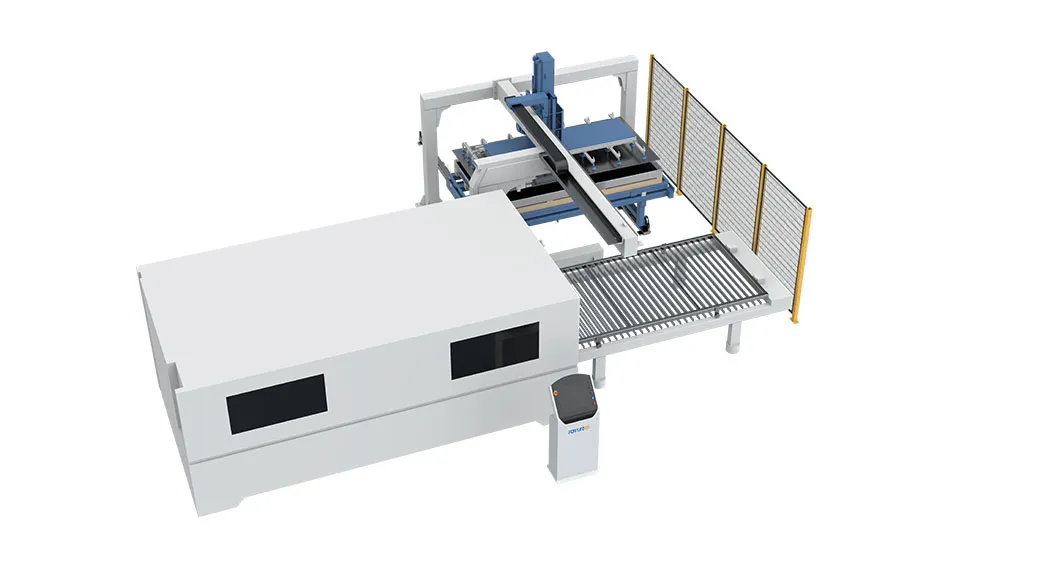
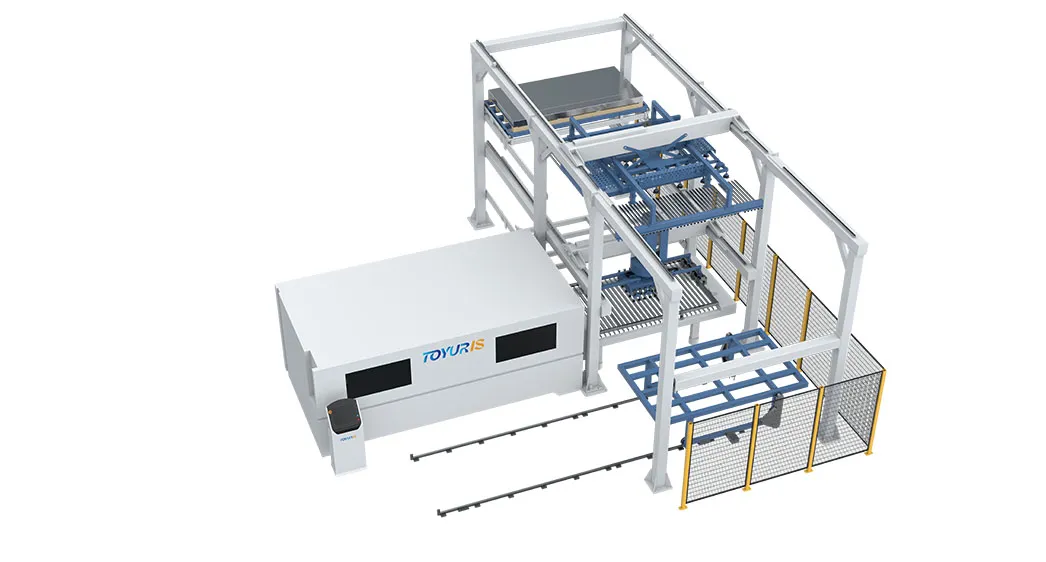
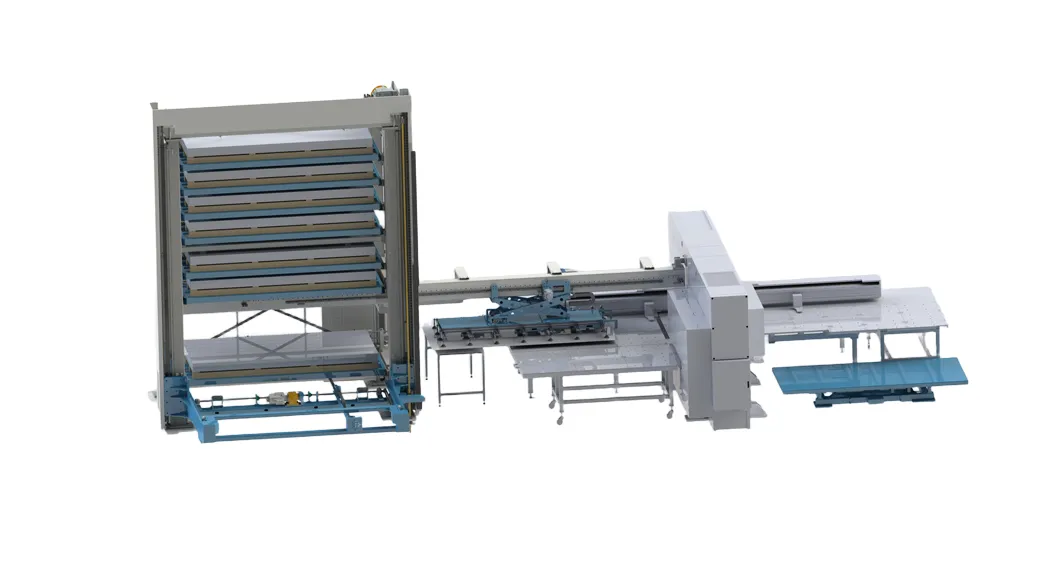
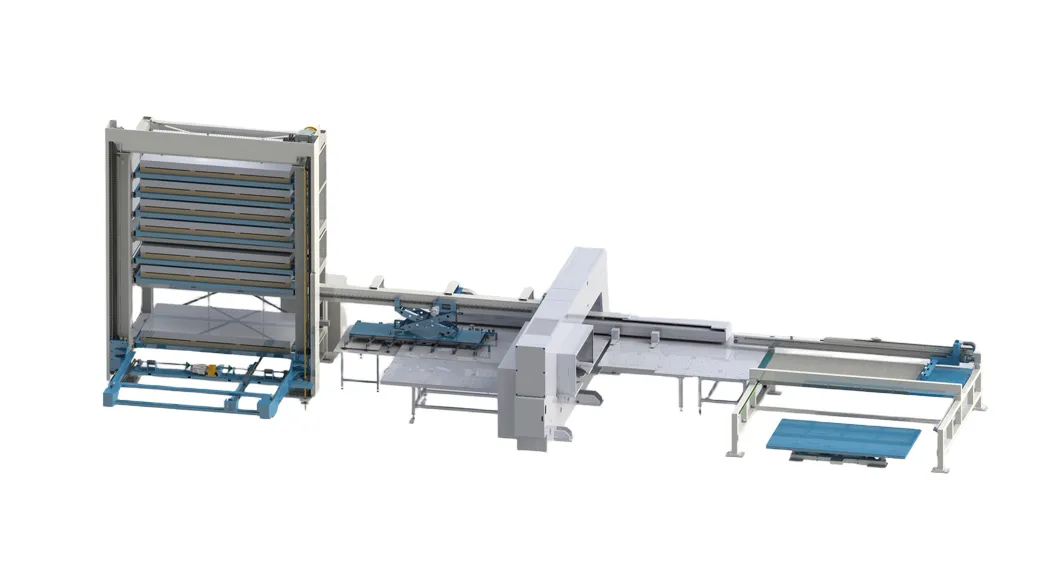
Automated storage and AGV material handling can deliver measurable ROI in sheet metal manufacturing, but the investment case does not begin with the price of an AGV or the number of warehouse operators that can be reduced. The stronger business case comes from improving the entire material flow between raw-material storage, production equipment, WIP buffers, and finished goods.
For a sheet metal factory, material handling is often treated as a supporting activity. In reality, it directly affects machine utilization, production lead time, inventory accuracy, floor-space consumption, operator workload, scheduling stability, and delivery performance. A laser cutting machine can have excellent technical performance and still lose productive time if the correct sheet is not available when required. A bending cell can have sufficient theoretical capacity while operators spend excessive time searching for parts or moving WIP.
This is why automated storage and AGV systems should be evaluated as part of the production system rather than as standalone warehouse equipment.
The critical question is not simply whether automation reduces warehouse labor. It is whether the factory can convert improved material flow into measurable gains in throughput, lead time, inventory control, space utilization, production stability, and future scalability.
Storage automation becomes particularly relevant when material volume, SKU diversity, handling frequency, production complexity, or factory space makes manual material management increasingly difficult to control.
A manual warehouse may work effectively when production volume is relatively low and material varieties are limited. As production grows, however, the warehouse often becomes a hidden constraint.
Typical warning signs include:
Operators spend significant time searching for sheets.
Raw materials are stored in multiple temporary locations.
Forklifts frequently cross production areas.
Production machines wait for material delivery.
WIP accumulates between processing operations.
Inventory records do not accurately reflect physical stock.
Urgent orders require manual material searches.
Warehouse space expands without proportional production growth.
Material movement depends heavily on individual operators.
Production planning and warehouse activity are poorly synchronized.
When several of these conditions exist simultaneously, the economic value of automation is usually broader than warehouse labor savings.
A realistic ROI model should include both direct and indirect benefits.
| ROI Component | Potential Impact | How to Measure It |
|---|---|---|
| Labor | Less manual storage and retrieval work | Labor hours before and after automation |
| Machine Utilization | Less machine waiting for material | Material-related downtime |
| Warehouse Space | Higher storage density | Floor area per stored sheet or pallet |
| Inventory Accuracy | Fewer stock discrepancies | Inventory variance rate |
| Material Damage | Lower handling-related loss | Damage and scrap records |
| Lead Time | Faster material availability | Retrieval and waiting time |
| WIP | Better control of intermediate inventory | WIP quantity and residence time |
| Scalability | Additional output without proportional labor growth | Output per logistics labor hour |
The important point is that not every factory will receive the same benefit from every category.
A factory with inexpensive labor and abundant floor space may have a relatively weak labor-saving case but a strong machine-utilization case. A factory operating in a space-constrained facility may obtain substantial value from storage density. A high-mix manufacturer may benefit more from inventory accuracy and material traceability than from direct labor reduction.
The relationship between logistics and production is straightforward: machines cannot produce without the correct material at the correct time.
Consider a laser cutting cell scheduled to process 30 sheets during a production shift. If material retrieval takes longer than expected, the machine may experience several interruptions.
The machine's nominal cutting speed has not changed. Its technical specification has not changed. Yet the actual output of the production cell falls because material availability is unreliable.
This creates an important distinction between:
Machine Capacity and System Capacity.
Machine capacity describes what the equipment can theoretically process. System capacity describes what the factory can actually produce after accounting for material availability, setup, logistics, WIP, quality, and downstream constraints.
Automated material handling targets the second problem.
Laser cutting is often one of the first processes where material flow becomes strategically important because sheets must be retrieved, positioned, loaded, unloaded, sorted, and routed to subsequent operations.
With an automated storage architecture, the warehouse can associate each material position with information such as material grade, thickness, sheet dimensions, quantity, and availability.
A production requirement can then trigger material retrieval instead of relying on an operator to locate the required sheet manually.
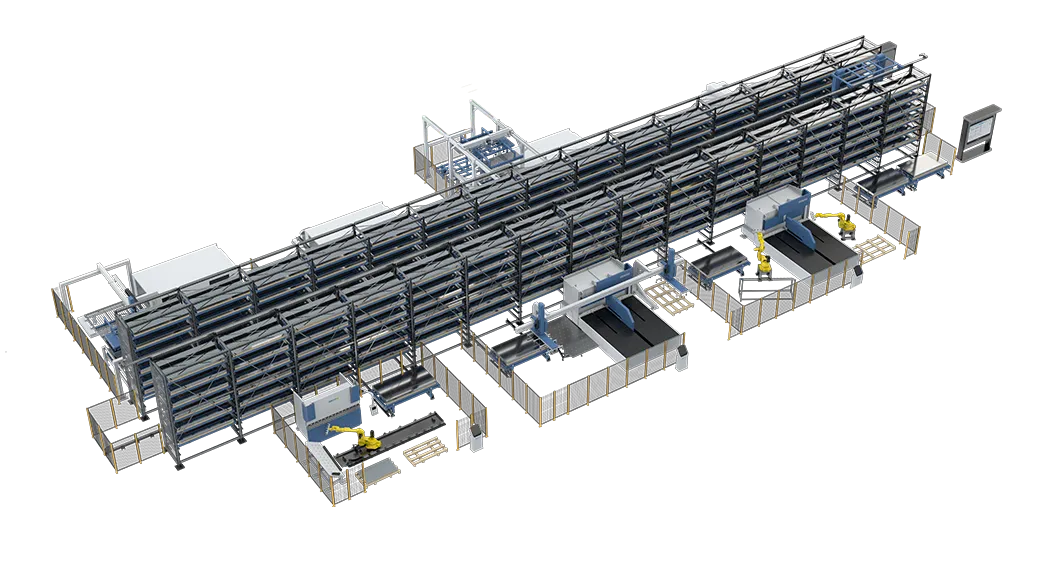
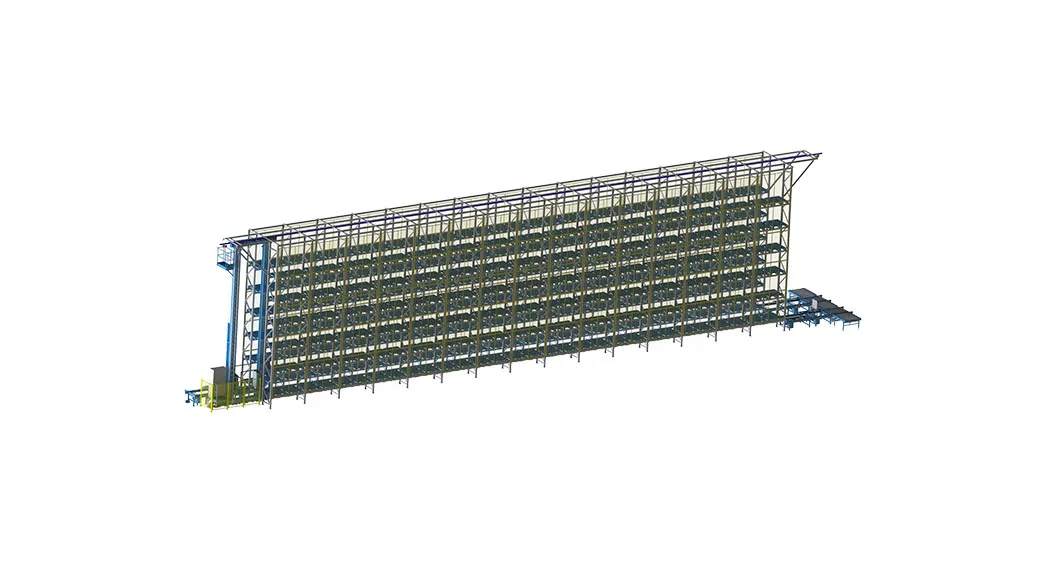
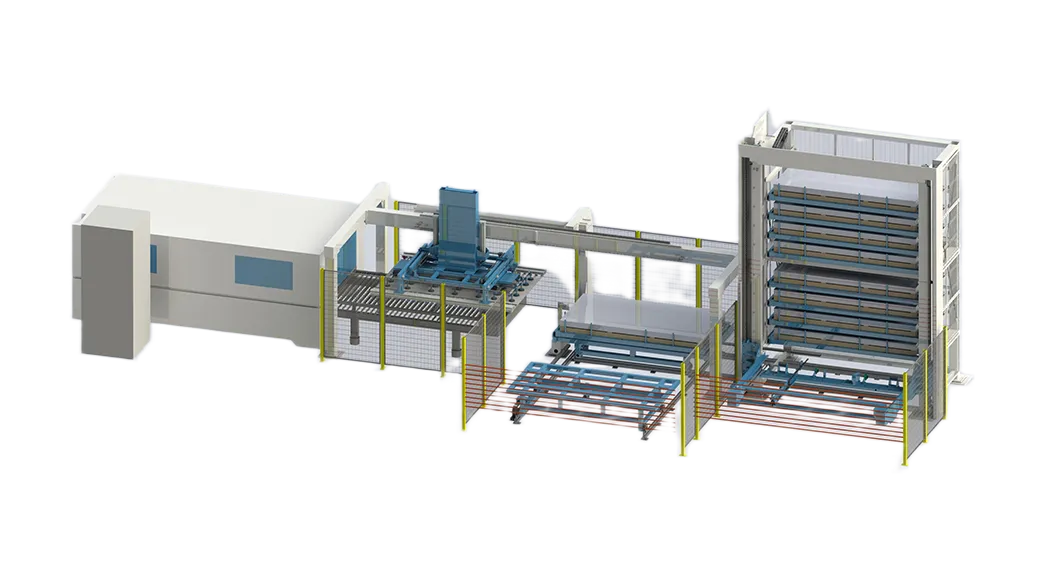
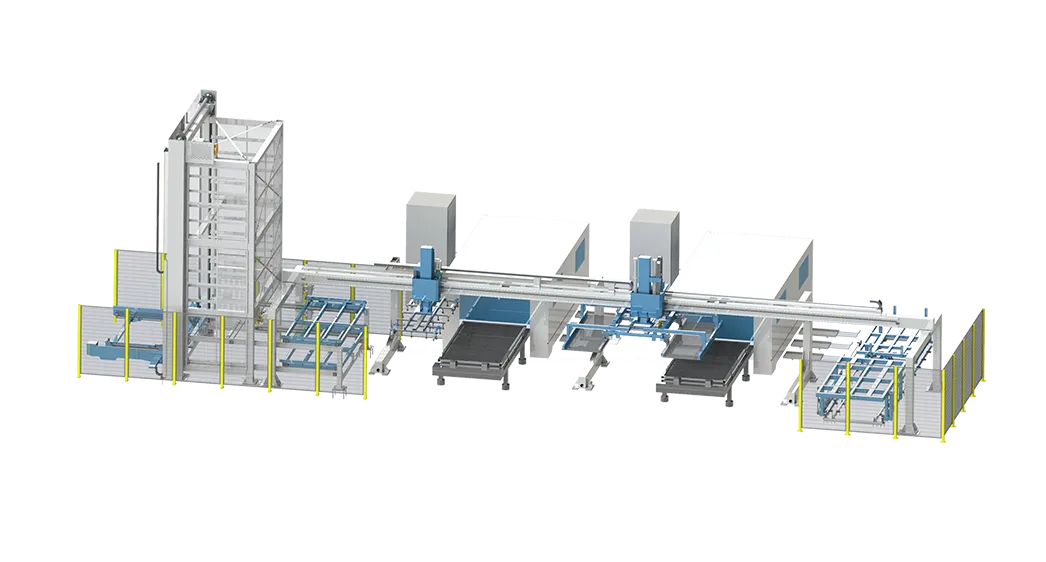
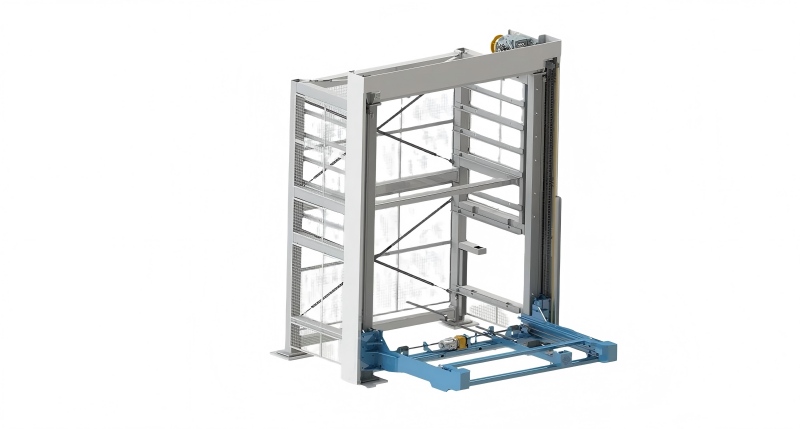
For example, an automated sheet metal storage system can form part of a connected production environment in which material retrieval is linked to the production schedule.
The resulting benefit is not simply faster warehouse operation. It is improved synchronization between storage and processing equipment.
This becomes increasingly valuable when a factory operates multiple cutting machines, multiple material grades, short production batches, or high-frequency order changes.
Material retrieval is often underestimated because individual delays appear small.
Suppose an operator spends eight minutes locating and delivering material for a production task. If this occurs 25 times per shift, the direct handling time is already more than three hours.
But the economic impact can be larger than three labor hours.
If the production machine waits during those retrieval activities, the factory may also lose machine utilization.
The calculation therefore needs to distinguish between:
Labor time spent retrieving material
Machine time waiting for material
Additional forklift movement
Production schedule disruption
Additional WIP caused by delayed material
Potential overtime required to recover lost production
A logistics improvement that eliminates 10 minutes of machine waiting can sometimes create more economic value than one that eliminates 10 minutes of warehouse labor.
AGVs become more economically attractive when material movement is frequent, repetitive, predictable, and distributed across multiple production areas.
Typical applications include:
Raw material delivery
Sheet transfer between storage and cutting
WIP movement between processes
Finished-part transportation
Empty pallet or container movement
Production-cell replenishment
Transfer between warehouse and inspection
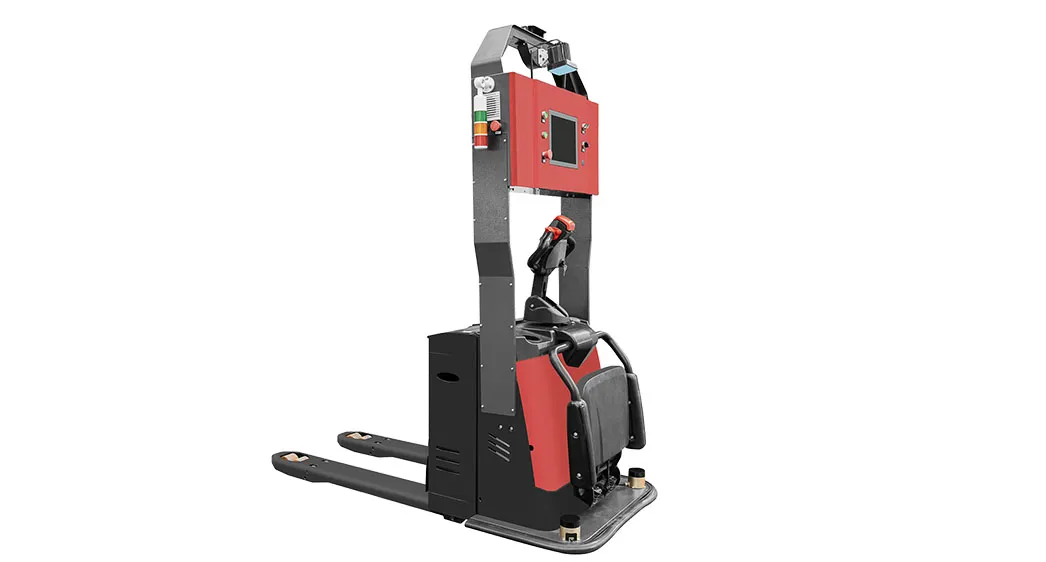
An AGV forklift becomes particularly useful when forklifts or manual transport vehicles repeatedly perform the same routes.
The value comes from turning repetitive transport into a predictable production service.
Replacing a manual forklift with an AGV is only one possible benefit.
A broader objective is to create a logistics system that is connected to production demand.
In a traditional factory, an operator may receive a phone call, paper instruction, message, or verbal request to move a material pallet. The operator then decides when to perform the task.
In a connected production environment, the material request can originate from the production system. The logistics system receives the destination, material identity, priority, and required timing, and the transport task can then be executed automatically.
This changes the logistics model from operator-driven transportation to production-driven transportation.
That difference is often more important than the AGV itself.
AGV ROI should be calculated using the total logistics workload rather than simply counting the number of forklift operators.
A practical model can include:
Annual AGV Benefit = Labor Savings + Machine Waiting Reduction + Productivity Gain + Damage Reduction + Inventory Benefits − Additional Operating Costs
The initial investment should include the complete system rather than the vehicle alone.
| Investment Item | Typical Consideration |
|---|---|
| AGV Vehicles | Number, payload and operating configuration |
| Charging | Charging stations and energy infrastructure |
| Navigation | Navigation infrastructure or mapping requirements |
| Software | Fleet management and task dispatch |
| Interfaces | MES, warehouse and production equipment integration |
| Safety | Protection systems and facility adaptation |
| Installation | Commissioning and production-line integration |
| Training | Operator and maintenance training |
A reliable ROI calculation should compare this complete investment against measurable annual operating benefits.
Warehouse floor space has economic value even when it does not appear directly on a production cost report.
Manual storage often requires aisles, access areas, forklift turning space, temporary staging zones, and additional buffers.
Automated storage can increase storage density by organizing material vertically and controlling retrieval systematically.
This can create several benefits:
More material stored within the same building footprint
Less floor area dedicated to aisles
Reduced temporary material accumulation
Better separation of raw material and WIP
More predictable storage locations
Potential avoidance of building expansion
The last point can be particularly significant.
If automation allows a factory to increase material capacity without leasing or constructing additional warehouse space, the avoided expansion cost can become an important component of the business case.
Inventory accuracy is not simply an accounting issue. It directly affects production scheduling.
If the system says a particular stainless-steel sheet is available but the physical warehouse cannot locate it, the production schedule becomes unreliable.
Operators may search for the material, substitute another sheet, delay the order, or place the job on hold.
Automated storage systems can associate physical storage positions with digital inventory records, making it easier to maintain a consistent relationship between:
Material Identity → Storage Location → Quantity → Production Allocation → Retrieval → Consumption
This creates stronger traceability and reduces the risk of material being physically available but digitally invisible, or digitally available but physically missing.
Yes, but only if material handling is integrated with production planning and execution.
Automation by itself does not automatically reduce WIP.
If a factory simply moves WIP faster while continuing to release excessive production orders, the amount of WIP may remain unchanged.
The more effective approach is to connect logistics decisions with production status.
For example, if the bending department is already heavily loaded, the logistics system should not continuously deliver additional semi-finished parts into the bending buffer merely because those parts are available.
Instead, material movement should reflect actual production demand and buffer capacity.
This is where MES and logistics automation become closely connected.
MES can provide the production context required to prioritize logistics tasks.
Without production information, an AGV may know that a material needs to move from location A to location B. It may not know which production order is more urgent or which machine is approaching a material shortage.
With MES integration, logistics can be prioritized according to production requirements.
For example:
| Production Situation | Logistics Response |
|---|---|
| Machine approaching material shortage | Increase retrieval priority |
| Urgent production order | Prioritize related material movement |
| Downstream buffer full | Delay unnecessary WIP transfer |
| Machine downtime | Reassign or postpone transport task |
| Quality hold | Prevent automatic transfer to next process |
| Production completed | Move finished material to next destination |
This is where the economic value of logistics automation can increase significantly. The AGV is no longer simply replacing a forklift route; it is becoming part of the factory's production execution architecture.
Not every factory needs AGVs immediately.
Automation can be premature when the underlying production process is unstable or the material flow has not yet been standardized.
Examples include:
Production routes change frequently without clear rules.
Material locations are not standardized.
Production priorities change continuously without formal scheduling logic.
WIP quantities are not controlled.
Material identification is inconsistent.
Transport routes are highly unpredictable.
Production data is unavailable.
Operators frequently bypass established processes.
In such cases, introducing AGVs may automate an inefficient process rather than improve it.
The factory should first standardize material identification, storage locations, production routes, and logistics rules.
Automation then has a stable process to execute.
A useful assessment should examine four dimensions: volume, repetition, predictability, and integration.
| Factor | Low Automation Readiness | Higher Automation Readiness |
|---|---|---|
| Material Volume | Low and irregular | High and continuous |
| Transport Frequency | Occasional | Frequent and repetitive |
| Routes | Highly variable | Predictable |
| Material Identification | Mostly manual | Digitally identifiable |
| Storage Locations | Flexible and informal | Defined and controlled |
| Production Data | Fragmented | Connected |
| WIP Management | Manual | System-controlled |
The stronger the factory performs across these dimensions, the easier it becomes to create a predictable automation system.
There is no universal payback period because the economics depend heavily on factory conditions.
A system with a high initial investment can still generate a strong business case if it supports high production volume and eliminates major logistics constraints. Conversely, a relatively inexpensive automation project may have weak ROI if material movement is infrequent.
The correct approach is to calculate the factory's own baseline.
A simple annualized model is:
Annual Net Benefit = Annual Quantifiable Benefits − Annual Additional Operating Costs
Then:
Simple Payback Period = Initial Investment ÷ Annual Net Benefit
For a more complete investment analysis, manufacturers should also consider equipment life, maintenance, financing costs, residual value, future labor costs, production growth, and the time value of money.
The important principle is that the model should be based on measurable operational data rather than assumptions such as “one AGV replaces one forklift driver.”
A production line should not be evaluated only according to today's workload.
If production volume is expected to increase, the factory may need additional material-handling labor, larger warehouse space, more forklifts, or additional staging areas under a manual model.
Automation can change this scaling relationship.
For example, a warehouse system may be able to accommodate increased inventory density without requiring a proportional increase in floor space. A fleet-management system may coordinate additional AGVs without completely redesigning logistics processes.
This creates a second type of ROI:
avoided future investment.
If automation postpones the need for a warehouse expansion or reduces the need to build additional logistics infrastructure, that benefit should be included in a long-term investment model.
The physical architecture should be designed around the actual production route.
A typical sheet metal flow may look like:
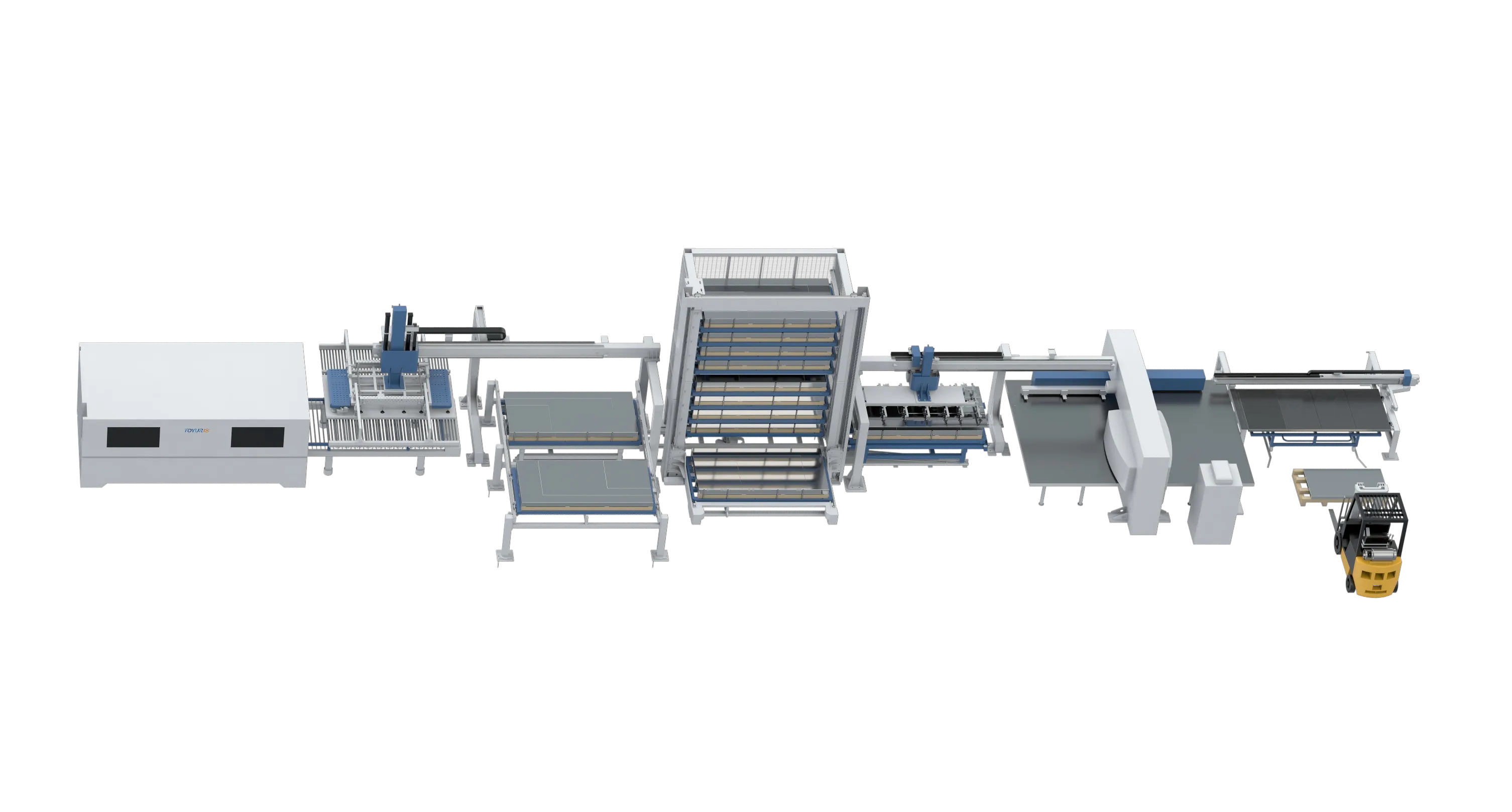
Raw Material Receiving → Automated Storage → Material Retrieval → Cutting → Sorting → WIP → Punching → Bending → Welding → Inspection → Finished Goods
Each transfer point should have a defined material identity and destination.
The system should know not only where a material is located but also why it needs to move.
That distinction becomes important when multiple production orders use similar materials.
Material retrieval should ideally be linked to production requirements rather than based solely on warehouse availability.
AGVs do not necessarily need to move every material or every product.
The highest-value applications are usually repetitive transport tasks where movement consumes substantial labor time or interrupts production.
Potential applications include:
Raw sheet pallets
Cut sheets
WIP containers
Finished parts
Production pallets
Tooling carriers
Empty pallets
Material containers
The payload, dimensions, route, floor conditions, traffic pattern, loading method, and required transport frequency should determine the AGV configuration.
In some factories, forklift-type AGVs are appropriate for palletized material. In others, dedicated mobile platforms or customized handling systems may provide a better fit.
Installing the system is not the end of the ROI analysis.
The factory should establish baseline KPIs before commissioning and compare them against post-implementation results.
| KPI | Baseline | Post-Automation Target |
|---|---|---|
| Material Retrieval Time | Manual average | Reduced and standardized |
| Machine Waiting for Material | Recorded minutes | Reduced |
| Warehouse Labor Hours | Current workload | Reduced or redirected |
| Inventory Accuracy | Current variance | Improved |
| Material Damage | Current loss rate | Reduced |
| WIP Residence Time | Current average | Reduced |
| Transport Completion Rate | Manual performance | System-controlled |
| Production Lead Time | Current average | Reduced |
This creates an evidence-based approach to continuous improvement.
A factory may purchase an automated storage system, AGVs, automated cutting equipment, and a sophisticated MES, yet still fail to achieve the expected performance if these systems operate independently.
The real production system consists of multiple interconnected flows:
Material Flow + Information Flow + Production Flow + Quality Flow
If material moves without production information, the factory can create unnecessary WIP.
If production schedules without material availability, machines can wait.
If warehouse inventory is not synchronized with production consumption, planning becomes unreliable.
If AGVs are disconnected from production priorities, transport resources may be busy while the actual bottleneck remains waiting.
Integration is therefore the mechanism that converts individual automation technologies into a production system.
Toyuris approaches automated sheet metal production as an integrated manufacturing environment rather than a collection of independent machines.
Within this architecture, warehouse automation, material handling, AGV systems, production equipment, and MES can be considered as interconnected elements of the same production strategy.
The objective is to connect the physical movement of material with the digital requirements of production.
For example, sheet metal storage can provide the physical foundation for controlled raw-material management, while AGV transport can connect storage with production cells.
The MES layer can then provide production context, allowing logistics tasks to be prioritized according to manufacturing requirements.
This system-level approach is especially relevant for factories that are moving from standalone machines toward smart sheet metal production lines.
Before requesting a quotation, manufacturers should collect several weeks of operational data if possible.
The most useful information includes:
Number of material movements per shift
Average retrieval time
Forklift travel distance
Warehouse labor hours
Machine waiting caused by material shortages
Current warehouse capacity
Material SKU count
Average material inventory
Peak material inventory
WIP quantities
Production volume
Production growth expectations
Current floor-space utilization
This data allows the automation supplier to design the system around actual operating conditions rather than generic equipment specifications.
It also gives the manufacturer a defensible baseline for evaluating ROI after implementation.
If machines frequently wait for material, transport activities interrupt operators, or WIP cannot move efficiently between processes, logistics may already be limiting production performance.
High-frequency and predictable transport routes are generally easier to automate than irregular movement requiring constant human judgment.
Material identification, storage location, quantity, and production allocation should be controlled consistently before automation is deployed.
Integration allows material retrieval and transport priorities to reflect actual production requirements.
The business case should be based on current workload, expected growth, labor cost, machine utilization, warehouse constraints, and the value of improved production stability.
A good automation design should be evaluated not only for today's requirements but also for its ability to support future production growth without proportional increases in logistics labor and floor space.
Automated sheet metal storage and AGV handling deliver measurable ROI when they solve a real production-flow problem. The strongest business cases are rarely based on forklift replacement alone. They come from the combined effects of faster material availability, reduced machine waiting, higher storage density, improved inventory accuracy, lower WIP disruption, more predictable production scheduling, and greater scalability.
The most important engineering principle is to evaluate logistics as part of the manufacturing system. Storage, AGV transportation, production equipment, WIP buffers, and MES should exchange information and operate according to the same production priorities.
For manufacturers considering automation, the right starting point is therefore not “How many AGVs do we need?” It is “Where does material flow currently constrain production, what does that constraint cost, and how can an integrated automation architecture remove it?”
When those questions are answered using real production data, automated storage and AGV handling can be evaluated as a measurable manufacturing investment rather than simply as a warehouse technology purchase.
NIST — Manufacturing and Smart Manufacturing